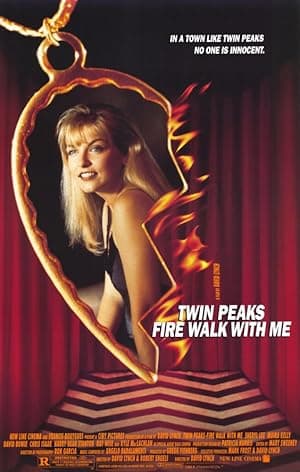
Twin Peaks: Fire Walk with Me
Laura Palmer at the centre of a town that keeps looking away.
// The setup
PLAYBACK STARTED
Twin Peaks: Fire Walk with Me arrives like someone lifting the lid on a small town and finding something uglier than a smoking kettle. David Lynch’s theatrical prequel doesn’t return to cosy mysteries — it opens with an FBI inquiry into Teresa Banks and then follows the last week of Laura Palmer’s life, the very events that shadowed the television series. It’s a film worth revisiting because Laura isn’t an object to be explained; she’s the axis the whole film turns around.
THE MOVIE
Laura Palmer is still the reason this movie works
The movie doesn’t begin with Twin Peaks’ postcard — it begins with federal agents and a dead night-shift waitress in another town. That Deer Meadow/ Teresa Banks opening is a deliberate doorway: a police procedural frame that quickly folds into something darker and more intimate.
Fire Walk with Me exists as a prequel in the strictest, structural sense: it shows the days that lead directly into the murder that gave the television series its engine. The choice to go backwards — to dramatise an end rather than extend the TV timeline — is what gives the film its brave, unsettling logic.
At the centre is Laura Palmer. Sheryl Lee is the face the camera keeps finding, and the film’s momentum comes from her attempts to understand and survive what’s happening to her. The picture is a study of how small-town innocence corrodes when secrets, abuse and addiction live behind closed doors.
THE CHARACTER
Why Laura Palmer matters
Sheryl Lee is credited as Laura Palmer, but the movie makes clear that Laura is not just a cast-list entry. She’s the story’s focal figure and the thing everyone else orbits around.
The film spends its time close to Laura’s last week precisely so we’re forced into her experience: we see the ways she tries to make sense of what’s being done to her, and how those attempts shape the decisions she makes. That inward pressure is what propels the narrative forward.
Her relationship with her father is not background colour. Leland Palmer appears as a central figure and the connection between father and daughter supplies much of the film’s moral and emotional weight.
And the people around Laura matter because they tally her life in different ways. Donna Hayward, as a close friend, provides contrast — someone less damaged and more willing to believe the surface story. That contrast keeps Laura’s private torment in harsh relief.
UNDER THE SURFACE
Twin Peaks: Fire Walk with Me has more on its mind than the plot suggests
If you strip away plot scaffolding, the film keeps returning to the same few obsessions: trauma, lost youth and the gap between public face and private suffering. It doesn’t explain trauma away; it inhabits it.
Loss of innocence isn’t sentimental here. The film shows young lives eroded by exploitation and addiction, and it treats those erosions as facts that must be shown rather than softened or summarised.
Secret lives and duality are everywhere — people who are one thing in daylight and another when the curtains close. That division is what gives the story its nervous energy: the public town and the hidden circuits of abuse never quite align.
There’s also a persistent sense of supernatural intrusion and questions about identity. Possession and otherworldly disturbance are threaded through the narrative in a way that complicates any simple, realistic reading of events.
THE FILMMAKING
How Twin Peaks: Fire Walk with Me was put together
The film’s production details are tightly credited: Patricia Norris is listed for production and costume design, and the usual technical credits for cinematography, editing and production design are clearly recorded in reference sources.
That’s worth mentioning because Fire Walk with Me feels very deliberate in how it arranges a scene — even when the content is deliberately off-kilter. The presence of named designers and craft credits shows this was a constructed world, not accidental chaos.
David Lynch’s authorship sits over those choices, which is why the film makes formal moves that can feel ruthlessly specific: it’s not scattershot surrealism but a sequence of choices laid over a troubled story.
If you want to talk about why particular moments land or don’t, the starting point is to look at the credited craftspeople and how those credits align with what the film chooses to show and withhold.
PRACTICAL EFFECTS
The effects work that gives Twin Peaks: Fire Walk with Me its physical personality
The film mixes restrained practical set work with camera and sound techniques that push scenes into dreamlike or hallucinatory zones. That balance — the real and the unreal layered together — is central to its demeanour.
It’s not a creature-feature with obvious prosthetics; production sources indicate specific prosthetics or miniature effects aren’t a prominent feature. Instead, the film uses practical sets as anchors for more surreal touches.
Sound and camera choices are part of that equation: the techniques lean on sensory disruption rather than flashy trickery, so the effect feels lodged in mood rather than spectacle.
Read that as intention: practical, tangible elements keep the story in a lived world while the surreal methods pry open perception and make the audience experience how disorientating Laura’s life is.
PURE 80S
Twin Peaks: Fire Walk with Me could not belong to any other decade
When Fire Walk with Me premiered in 1992 it didn’t sit nicely in critics’ hands. Audiences and festival-goers were divided — the film openly split opinion at Cannes and in its early U.S. reception.
That initial polarisation is part of its identity: it was a film that refused to be simply absorbed into expectations from the television series or mainstream cinema of the time.
The way it was received matters because it set the stage for later reassessment. The conversation around the film didn’t finish in 1992; it continued as people returned to it with different questions.
So its decade is not just a date stamp. The timing of its release — when audiences expected certain things from a Twin Peaks picture — shapes how the movie landed and how it has been rethought since.
THE LEGACY
Why Twin Peaks: Fire Walk with Me still matters
Some of the film’s afterlife comes from material that didn’t make the original cut. Deleted and alternate scenes were later assembled as Twin Peaks: The Missing Pieces, and that material has changed how people read the film.
Another chapter in its legacy is the director-approved 4K restoration and Criterion special edition, which brought the film back into careful circulation and gave viewers a fresh way to reassess it.
Those two strands — recovered footage and a meticulous home-video presentation — helped drive the shift from a divisive 1992 reception to a more substantial critical reappraisal.
Because the film was so contested at release, subsequent scholarship and criticism frequently return to it when talking about David Lynch and the wider Twin Peaks project, which has kept it in the conversation.
THE VERDICT
Does Twin Peaks: Fire Walk with Me still hold up?
Yes — if what you want is a film that insists on feeling rather than tidy explanation. Fire Walk with Me is built to be experienced: it opens with an FBI probe into Teresa Banks and then refuses the neat chronology of a conventional prequel, choosing instead to dramatise Laura Palmer’s final days.
The movie foregrounds Laura’s double life — the public student and the hidden life of drugs, encounters and exploitation — and it keeps returning to that split as its main engine. That focus gives the film its emotional charge and its narrative urgency.
It also frequently cuts between realistic sequences and hallucinatory moments that blur time and perspective. Those structural moves make the film demanding, but they’re crucial to how it communicates subjective suffering rather than summarising it.
If you approach it expecting comfort you’ll be disappointed. If you’re prepared to visit a film that centres a young woman’s last week and refuses simple answers — and to accept a picture that was divisive in 1992 and later reappraised via restorations and Missing Pieces — then it’s very much worth watching.
Share this movie
// Keep watching
More movies from the 90s
If Twin Peaks: Fire Walk with Me is your kind of movie, there's plenty more on the shelves worth rewinding.
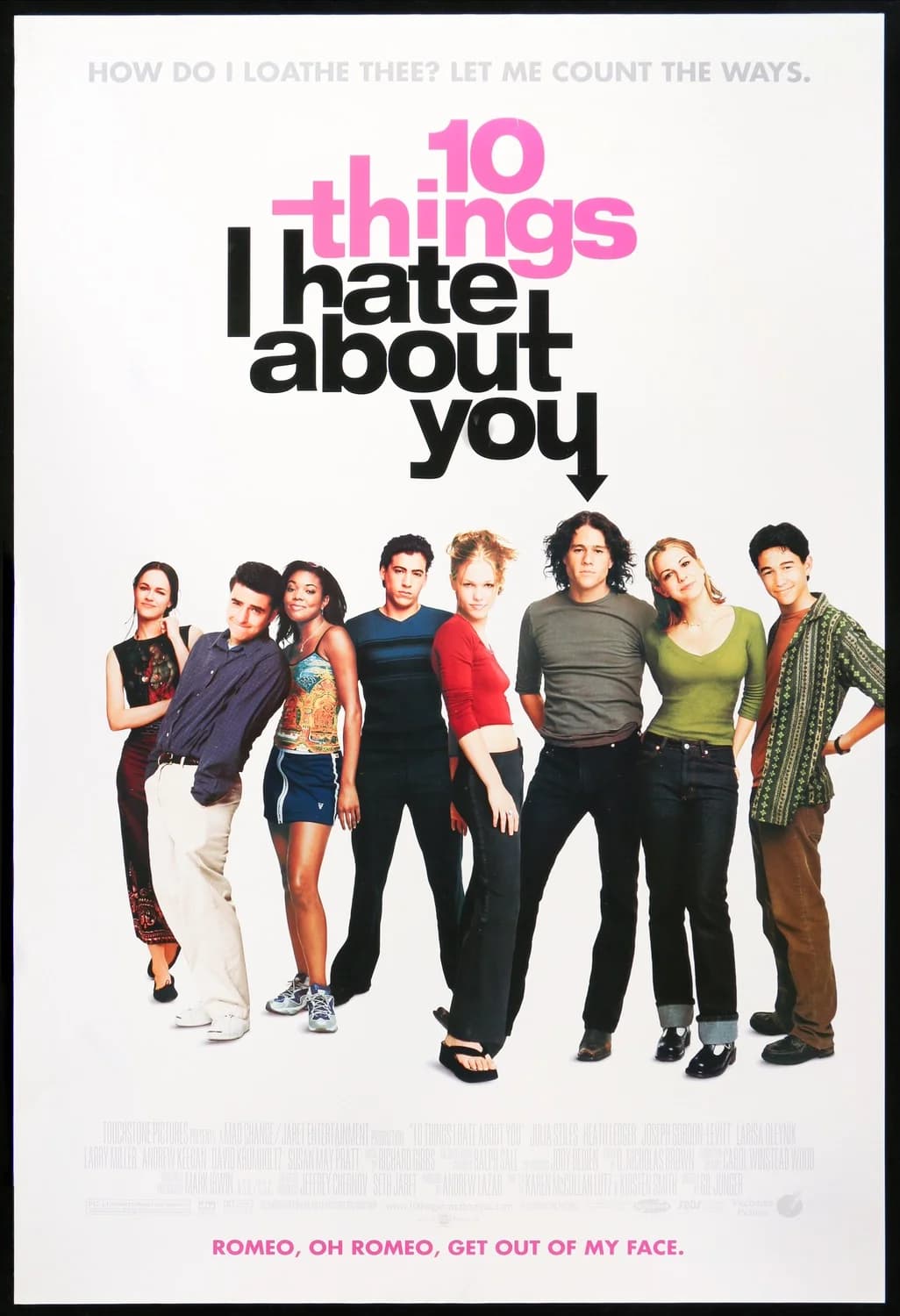
1999 // VHS
10 Things I Hate About You
Sibling rules, a rooftop serenade and one very stubborn Kat — Shakespeare in a school corridor.

1999 // VHS
American Beauty
Lester Burnham, suburban rot and a midlife argument that still stings.

1999 // VHS
Any Given Sunday
Al Pacino's coach anchors the chaos of a film about football turned into product — loud, messy and oddly persuasive.