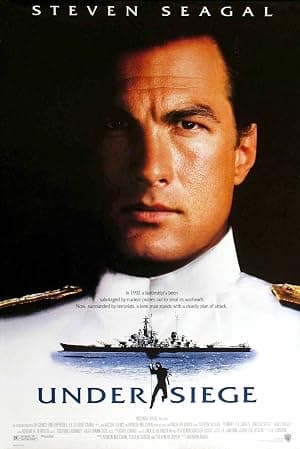
Under Siege
One cook. One battleship. A lot of very bad business.
// The setup
PLAYBACK STARTED
Under Siege lands on the blunt premise that a demoted ex‑Navy SEAL working as a ship’s cook is the only person left who can stop a team of mercenaries from stealing Tomahawk missiles. Directed by Andrew Davis and running a lean 103 minutes, it’s a compact, well‑oiled piece of early‑90s action cinema that knows exactly what it is.
THE MOVIE
Casey Ryback is still the reason this movie works
What most people remember before they remember the plot beats is the central recognisable shape: one highly trained bloke, hidden in plain sight as the ship’s cook, quietly undoing a much better‑equipped gang who’ve taken over a battleship. That basic set‑up — a single professional against an organised, armed small force inside a confined environment — is exactly the engine Under Siege runs on.
Andrew Davis stages it economically. The inciting sequence arrives like a practical joke gone fatal: a helicopter‑delivered band and caterers are actually mercenaries, they kill the officers and seize control of the Missouri’s systems, and suddenly the ship is both prize and prison. Into that claustrophobic mess steps Casey Ryback, demoted and boxed into a cook’s whites after a previous disciplinary incident, who quietly turns into the vessel’s covert defender.
Put simply: the movie is less about spectacle for spectacle’s sake and more about a readable contest of competence. That clarity — one location, one ticking problem, one stubborn professional in the middle of it — is why Under Siege still draws attention three decades on.
THE SETUP
The idea that sets Under Siege in motion
The film’s premise is elegantly simple: Chief Petty Officer Casey Ryback is aboard the decommissioning battleship USS Missouri when mercenaries seize the vessel and its arsenal. That economy of concept keeps the audience focused — there isn’t time or space for distracting subplots.
The mercenaries arrive under cover: a band and caterers delivered by helicopter. It’s a tidy piece of misdirection that lets the bad guys walk on board and then, crucially, remove the ship’s leadership before anyone really realises what’s happened.
What makes the situation tense beyond the weapons themselves is the ship as a contained machine. Communications are compromised, the settings are cramped, and there’s an escalating countdown — missiles, a possible naval airstrike — that turns every corridor into a potential emergency.
All of those story mechanics let Ryback’s particular set of skills play out. A confined, technologically armed environment turns individual competence into the practical drama the film wants to stage.
THE CHARACTER
Why Casey Ryback matters
Casey Ryback is written as an obvious puzzle piece: a former Navy SEAL reduced, by discipline, to cooking for a battleship. That demotion is narratively useful — it keeps him in the background, underestimated and unremarkable to everyone who isn’t paying attention.
Being invisible is his advantage. When the Missouri is taken, Ryback is not part of the chain of command to be targeted first, which gives the story the operative conceit that competence can hide in the plainest place: the galley.
His role isn’t solitary in the narrative: Jordan Tate arrives as an entertainer and, although initially a civilian, becomes Ryback’s reluctant ally. That shift matters because it gives the film a companion who helps translate Ryback’s quiet, practical resourcefulness into the kind of stakes the audience can follow.
Ryback’s particular usefulness is why the character returned for a sequel — his setup is portable: take the same professional, put him in a different confined disaster, and the contest of competence resumes.
THE PERFORMANCE
Why Tommy Lee Jones's performance matters
Contemporary reviewers often flagged up the villains, and for good reason: Tommy Lee Jones and Gary Busey were singled out as scene‑stealing presences. That sort of attention matters because it gives the film an enlivening contrast — a quietly effective lead opposite flamboyant antagonists.
Jones’s William 'Billy' Strannix is written to be larger than the everyday officers on the Missouri, and the reviews’ notice of him underlines how the role supplies the movie with theatrical, visible danger.
Casting attention on the villains lets the film oscillate between the measured, handyman energy of Ryback and the noisy confidence of the mercenaries. It makes the conflict feel both personal and cinematic.
In short: the contemporary response to Jones (and Busey) helped turn the antagonists into reliable dramatic sparks in a plot that otherwise stays stubbornly utilitarian.
UNDER THE SURFACE
Under Siege has more on its mind than the plot suggests
At face value, Under Siege is an efficient action picture. Under the surface, it’s staging a handful of late‑Cold‑War and early‑post‑Cold‑War anxieties as practical problems: a single professional against organised violence, and the idea that weapons can be taken out of state control and sold.
That contrast — the individual’s competence versus an organised, technical force — is the film’s moral shorthand. It’s a way of measuring worth: skill, calm and discipline versus the blunt commercial brutality of mercenaries.
A second strain is military betrayal: the plot depends on inside collaboration and the suggestion that what should be disciplined, supervised state power can be corrupted or turned to private profit.
Finally, there’s a note about weapons as commerce. The Tomahawk missiles at the story’s centre aren’t just explosive set‑pieces; they’re the commodity that turns a military prize into black‑market opportunity.
THE FILMMAKING
How Under Siege was put together
Under Siege leans on practical, solved problems rather than flashy set‑pieces. To simulate a ship at sea the production built a 100‑foot blackout barge and additional camera barges so the moored vessel could read as an ocean‑going target while shooting in Mobile Bay.
There’s a workmanlike clarity to those choices: instead of inventing a lot in post, the filmmakers physically shaped the environment to serve the script’s claustrophobic needs.
Multiple editors were credited on the picture, which points to the kind of hands‑on cutting needed to balance action beats, suspense and moments of quieter set‑up across a tight 103‑minute runtime.
The film’s craft was recognised too: it earned two Academy Award nominations in the sound categories, which speaks to how much of its energy relies on auditory precision as much as on visual staging.
PRACTICAL EFFECTS
The effects work that gives Under Siege its physical personality
The film makes deliberate use of optical and in‑camera techniques: the production documented use of the Introvision front‑projection process to composite foreground actors with projected backdrops and create three‑dimensional composite shots.
Where possible, the production favoured hands‑on solutions. The museum ship USS Alabama was renovated and dressed to play the USS Missouri for many sequences, keeping the action tangible rather than entirely studio‑constructed.
To help sell the illusion of a ship at sea, custom barges and camera platforms were constructed. They blocked shorelines and gave the moored ship a believable maritime context without the cost of being constantly at sea.
All of which adds up to a practical personality: the movie looks and feels built, not merely assembled in post, and that physicality helps the confined setting read as real and threatening.
PURE 80S
Under Siege could not belong to any other decade
Under Siege’s timing is telling: released in 1992, it exemplifies the early‑1990s studio appetite for mid‑budget, star‑driven action films that mixed practical effects with modest spectacle.
It’s the sort of movie a studio could make then: recognisable lead, manageable set‑pieces, and a production that balanced studio craft with location work. That business model shaped the film’s choices — focused, economical, and built around a single performer the audience could follow.
The result is a movie that feels of its moment not because of clothes or music cues, but because the industry in 1992 still valued that neat, self‑contained action vehicle.
If you’re watching it now, you’re seeing a form of filmmaking that was practical, direct and designed to be immediately legible to a broad audience.
THE LEGACY
Why Under Siege still matters
On the technical side, Under Siege earned two Academy Award nominations at the 65th Oscars for sound and sound effects editing — an acknowledgement that the movie’s aural craft was a big part of how it sold tension and action.
The film also spawned a sequel in 1995 that brought the same protagonist back for another contained action premise, which tells you the central character had enough narrative currency to return.
Industry coverage credits the film with raising Andrew Davis’s profile; the movie’s success led to opportunities that followed — most notably that Davis moved on to bigger studio assignments shortly after.
More recently, trade reports in 2021 noted a reboot was in development at Warner Bros/HBO Max, which indicates the property still has commercial life in the eyes of studios and producers.
THE VERDICT
Does Under Siege still hold up?
Yes — with a caveat. If you come for tidy mechanics and a clear contest of competence, Under Siege still delivers. Its premise is tight: a demoted ex‑SEAL cooking aboard the USS Missouri winds up the only realistic defender when mercenaries attempt to steal and traffic Tomahawk missiles. That economy keeps the picture brisk.
The confined‑ship mechanics — limited communications, tight corridors, an escalating missile threat — are still an effective way to turn logistics into suspense. Couple that with a short, efficient runtime and the film doesn’t overstay its welcome.
There’s also the practical plus of vivid antagonists: contemporary critics singled out Tommy Lee Jones and Gary Busey for bringing the movie a larger‑than‑life villain energy, which creates an entertaining contrast with Ryback’s quiet, professional stubbornness.
So if you want a focused, well‑constructed action movie — one where the fun comes from watching a competent individual dismantle organised chaos — Under Siege remains worth a watch. It’s not aiming for subtlety; it’s aiming to be a neat, noisy puzzle solved by one very capable person.
Share this movie
// Keep watching
More movies from the 90s
If Under Siege is your kind of movie, there's plenty more on the shelves worth rewinding.
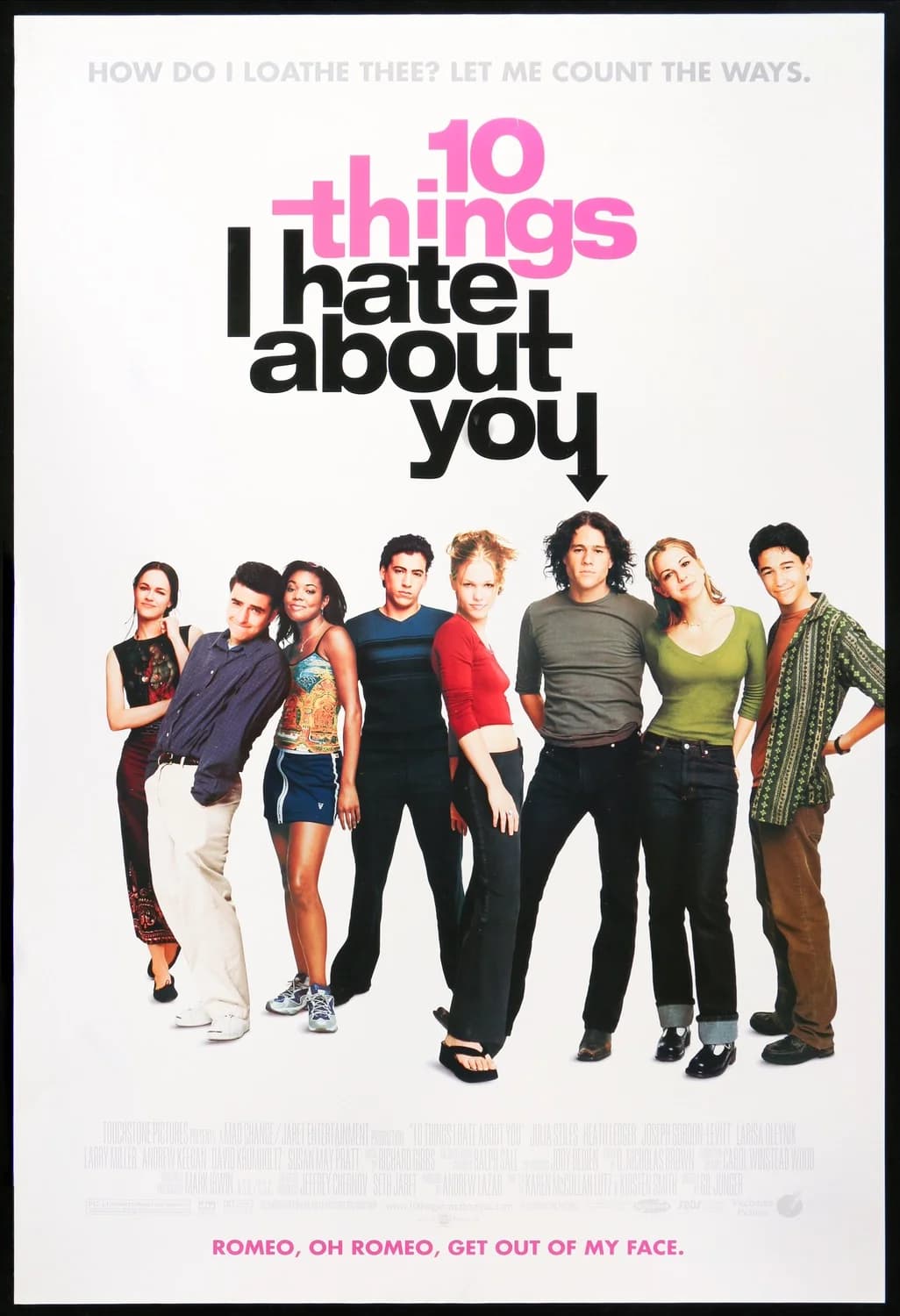
1999 // VHS
10 Things I Hate About You
Sibling rules, a rooftop serenade and one very stubborn Kat — Shakespeare in a school corridor.

1999 // VHS
American Beauty
Lester Burnham, suburban rot and a midlife argument that still stings.
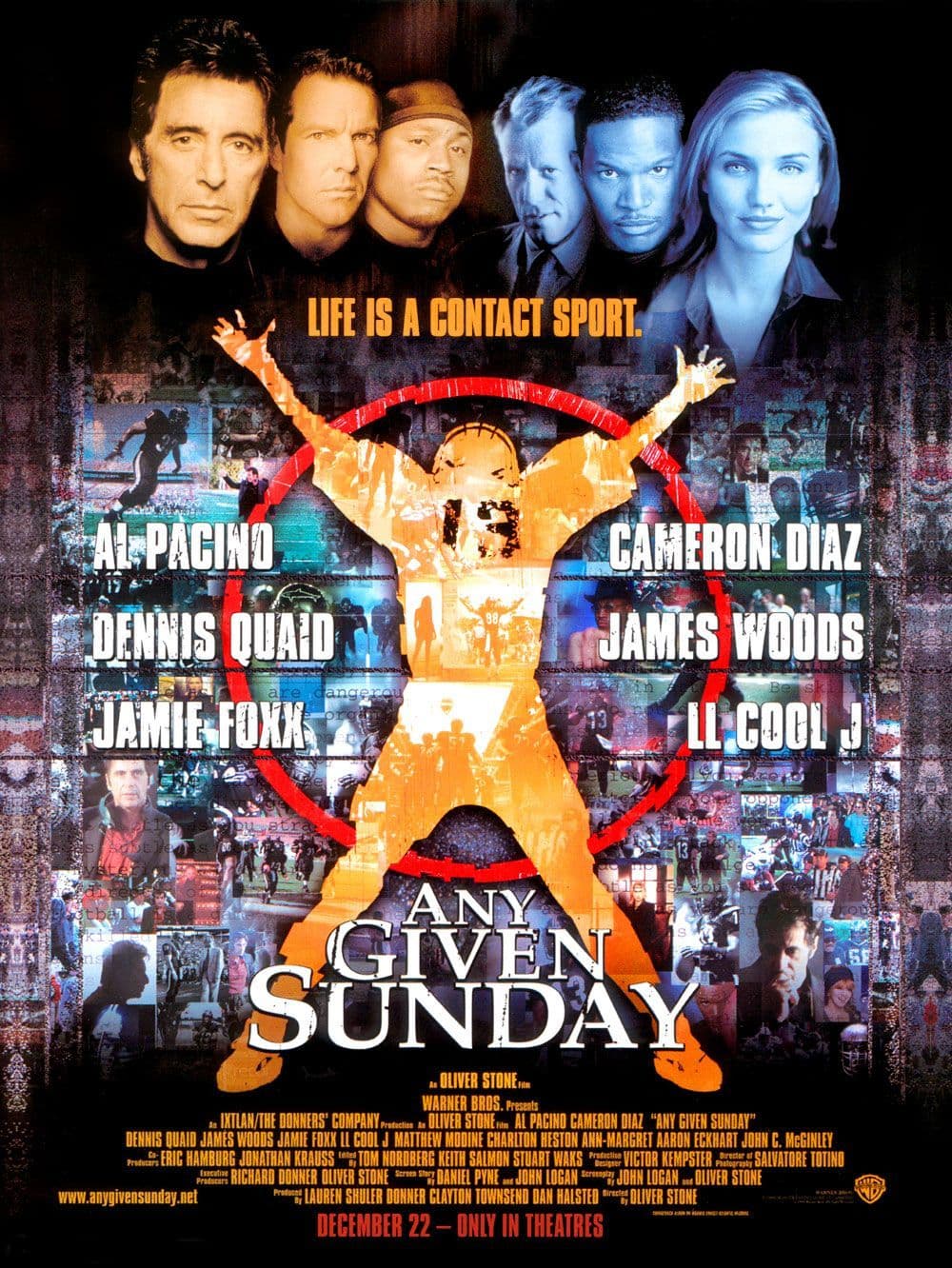
1999 // VHS
Any Given Sunday
Al Pacino's coach anchors the chaos of a film about football turned into product — loud, messy and oddly persuasive.