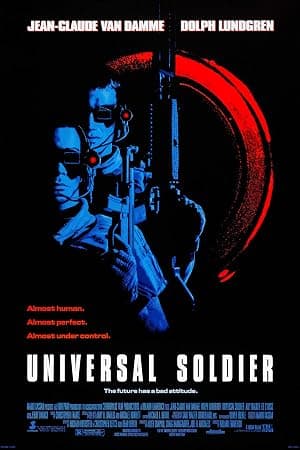
Universal Soldier
A war-dead soldier, a stubborn reawakening and one very particular idea of self.
// The setup
PLAYBACK STARTED
Remember that bit where a man who should be dead starts remembering enough to be dangerous? Universal Soldier is less about gadgets and more about what happens when a soldier’s past refuses to stay buried. It’s Roland Emmerich’s lean, noisy take on identity, memory and the ethics of making people into weapons — and Luc Deveraux is the engine that makes all of it click.
THE MOVIE
Luc Deveraux is still the reason this movie works
Universal Soldier bangs straight into one of those opening gambits you either buy or groan at: two soldiers in Vietnam shoot each other dead. That isn’t the end for Luc Deveraux; it’s the beginning of the movie’s stubborn argument about who you are when your past keeps coming back.
Decades later the military has a program that literally stitches bodies back into service and uses a neural serum and memory suppression to keep them obedient. It’s a tidy high‑concept engine — reanimation plus control — but what gives the picture its teeth is how Deveraux begins to remember enough to become unpredictable.
Jean‑Claude Van Damme plays Luc Deveraux and Roland Emmerich directs; the film runs briskly (102 minutes) and wears its sci‑fi military colours plainly. That combination — a simple, muscular idea handled without fuss — is why people still choose to talk about Universal Soldier rather than simply shrug at it.
THE SETUP
The idea that sets Universal Soldier in motion
Here’s the core bargain the film makes: the UniSols are reanimated corpses kept under control with a neural serum and routine memory suppression. Take the memories away and you get a predictable weapon. Give a soldier back the faintest trace of himself and the whole arrangement starts to creak.
That’s exactly what happens to Luc Deveraux. As fragments of his past leak through, Luc becomes less a program and more a person — which puts him on a collision course with the UniSol who once led him in Vietnam.
Veronica Roberts, an investigative TV journalist, is the practical device who nudges this process along; her curiosity turns into involvement and she helps Luc break out of the project’s control. She’s the audience’s foothold into a secretive military world.
The stakes are simple and effective: two former comrades, reanimated as controlled super‑soldiers, recognise each other in very different emotional states. Luc’s recovery vs Andrew Scott’s instability is the setup that keeps the action moving while the film asks questions about memory and will.
THE CHARACTER
Why Luc Deveraux matters
Luc Deveraux’s importance isn’t a marketing line, it’s structural. He starts the film as one more anonymous casualty of Vietnam and, through the UniSol program, becomes a controlled asset — until bits of memory pull him out of that neat categorisation.
What makes him memorable is that the movie trusts the idea of a man slowly remembering himself. Luc’s regained fragments create choices: he’s no longer a switch to be flipped, which complicates the neat military logic behind the programme.
There’s another wrinkle. His old sergeant, Andrew Scott, wasn’t fine before reanimation; he’d gone psychotic in Vietnam. Reuniting Deveraux with someone who already failed the test of humanity raises the dramatic temperature: one man remembering and another unravelling.
The character was played by Jean‑Claude Van Damme, and the script even gives a brief glimpse of a younger Luc to underline that this is about a life interrupted, not just a sci‑fi toy.
UNDER THE SURFACE
Universal Soldier has more on its mind than the plot suggests
Beneath the shoot‑outs and the muscle, the film keeps circling a handful of proper questions: who owns a memory, and how much of you remains when your past is erased? That pull between memory and identity gives many scenes a slightly uneasy undercurrent.
There’s a moral dimension too. The UniSol programme is a plain experiment in military ethics: resurrect people to serve as controllable assets. Once you accept that premise, you’re left asking whether the state has the right to rewrite a person — and what responsibility the programme’s architects carry.
Resurrection and reanimation are less about fantasy spectacle here and more about interruption — lives frozen and restarted to suit an agenda. When Luc begins to remember, the film has to confront the awkward business of restoring personhood to something that was treated purely as a weapon.
Put another way: Universal Soldier sells action, but it quietly keeps testing the cost of making soldiers into machines — and what happens when that machine insists it was once a man.
PRACTICAL EFFECTS
The effects work that gives Universal Soldier its physical personality
Universal Soldier isn’t a CGI showcase. Early plans imagined extensive computer‑generated biomechanical designs, but the screenplay was rewritten to dial that back and lean on more grounded staging instead. The result feels more tactile: threats arrive as physical problems to solve, not as graphics to admire.
That choice also handed more work to the stunt team. Vic Armstrong’s name appears in the credits as stunt coordinator and second‑unit director, which is exactly the kind of casting that keeps the action kinetic and believable on a hands‑on level.
In practical terms the film’s energy comes from staging and moveable pieces rather than elaborate digital set‑pieces. It’s an approach that makes fights feel immediate because they’re organised around real bodies and choreography.
You can argue that choosing fewer computer designs tightened the movie: it had to put muscle into plotting and performances instead of relying on effects wizardry to distract the audience.
PURE 80S
Universal Soldier could not belong to any other decade
Universal Soldier lands exactly where early‑1990s action cinema liked to live: big, simple concepts with established action stars attached. The era loved pairing muscle with a science‑fiction hook and seeing what combusted on screen.
Reviews at the time often placed the film beside other large‑budget technological action pictures; comparisons were almost inevitable because the film trades in the same territory — lethal engineered soldiers and the moral questions that come with them.
At the same time, the movie keeps one foot in a different conversation: it’s a Vietnam War story that gets rebooted into a near‑future military experiment. That lineage — old war trauma relit as modern techno‑problem — is very much of the period.
Put bluntly: Universal Soldier feels of its moment because it mixes straight‑ahead action cinema instincts with a tidy sci‑fi premise and lets the stars do the rest.
THE LEGACY
Why Universal Soldier still matters
The film’s afterlife is concrete: it generated a series of sequels, television followups and later direct‑to‑video entries that kept the UniSol idea alive across decades. That continuation matters because it shows the premise had narrative mileage beyond a single film.
More specifically, Jean‑Claude Van Damme’s Luc Deveraux and Dolph Lundgren’s Andrew Scott recur in later franchise entries, and that original pairing remained the franchise’s defining on‑screen match. The dynamic between the two is the thing subsequent instalments kept returning to.
So the movie matters less as a lone masterpiece and more as the origin of a persistent franchise idea — the soldier who remembers and the one who doesn’t. That duality gave writers and producers something to return to again and again.
Even if the original didn’t win unanimous critical praise on release, its ability to spawn sequels and keep its central conflict alive explains why it isn’t forgotten.
THE VERDICT
Does Universal Soldier still hold up?
Yes — with a caveat. If you come for a tidy sci‑fi action movie that keeps the focus on questions of memory and agency, Universal Soldier largely delivers. The central engine is simple and effective: the UniSol process uses a neural serum and memory suppression to control soldiers, and seeing that control start to fail is where the film earns attention.
Veronica Roberts’s investigation and her practical role in helping Luc escape give us a human line into the project; she’s an audience surrogate who turns curiosity into action and helps the story avoid turning into a cold technothriller.
The cat‑and‑mouse between Luc Deveraux and the unstable Andrew Scott supplies enough dramatic heat to carry the running time. One man remembering, one man unravelling — that contrast is the film’s real propulsive idea.
So should you watch it today? If you want an uncomplicated, idea‑driven action film from 1992 that privileges a single memorable conceit over complexity, Universal Soldier still does what it sets out to do. It isn’t subtle, but it knows which problem it wants to solve: what happens when a weapon remembers it used to be a man.
Share this movie
// Keep watching
More movies from the 90s
If Universal Soldier is your kind of movie, there's plenty more on the shelves worth rewinding.
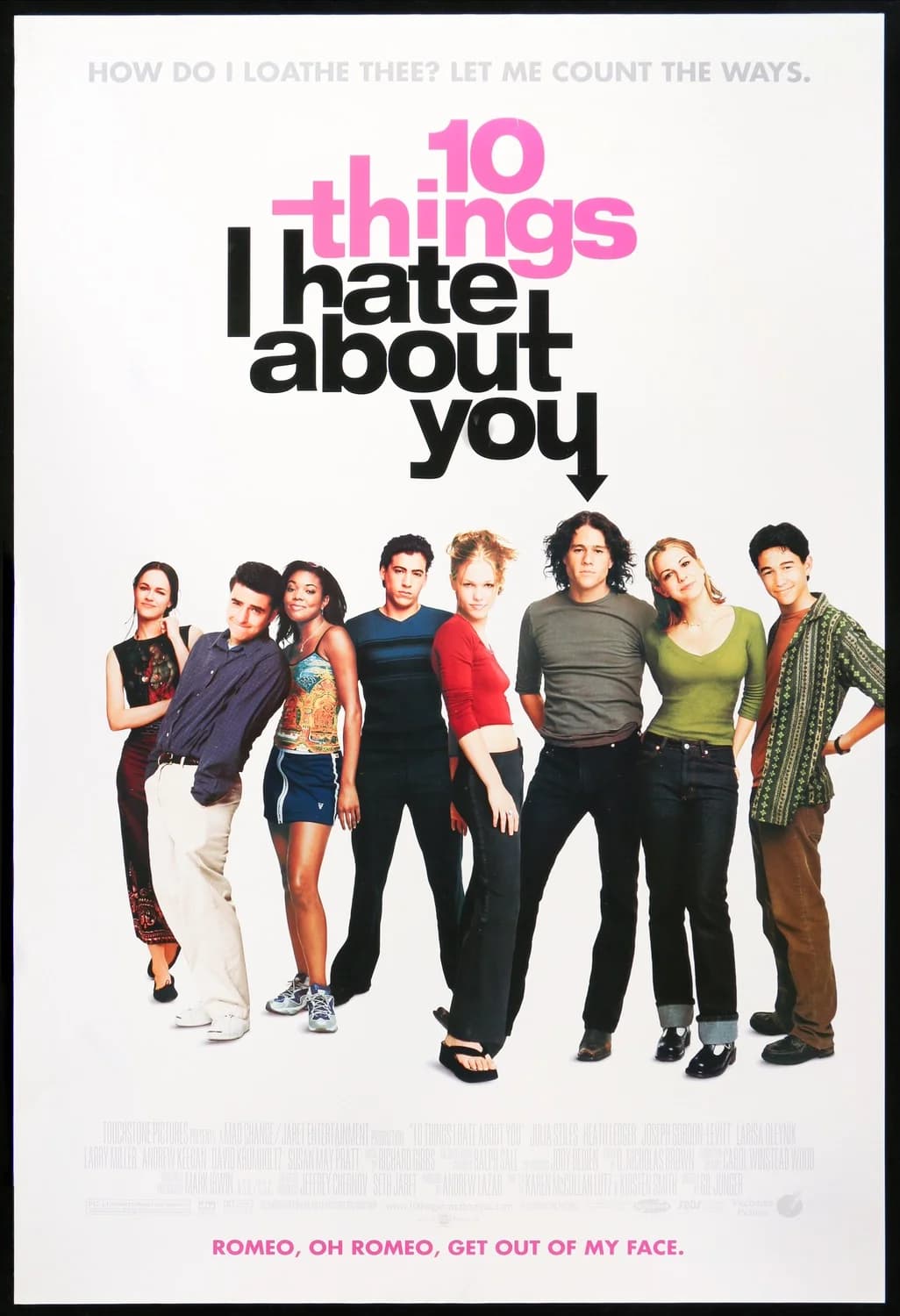
1999 // VHS
10 Things I Hate About You
Sibling rules, a rooftop serenade and one very stubborn Kat — Shakespeare in a school corridor.
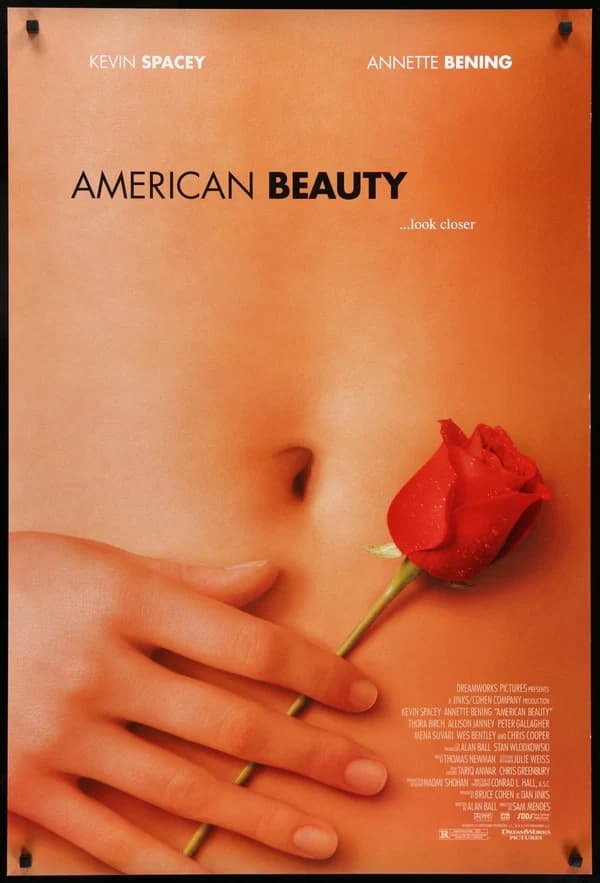
1999 // VHS
American Beauty
Lester Burnham, suburban rot and a midlife argument that still stings.
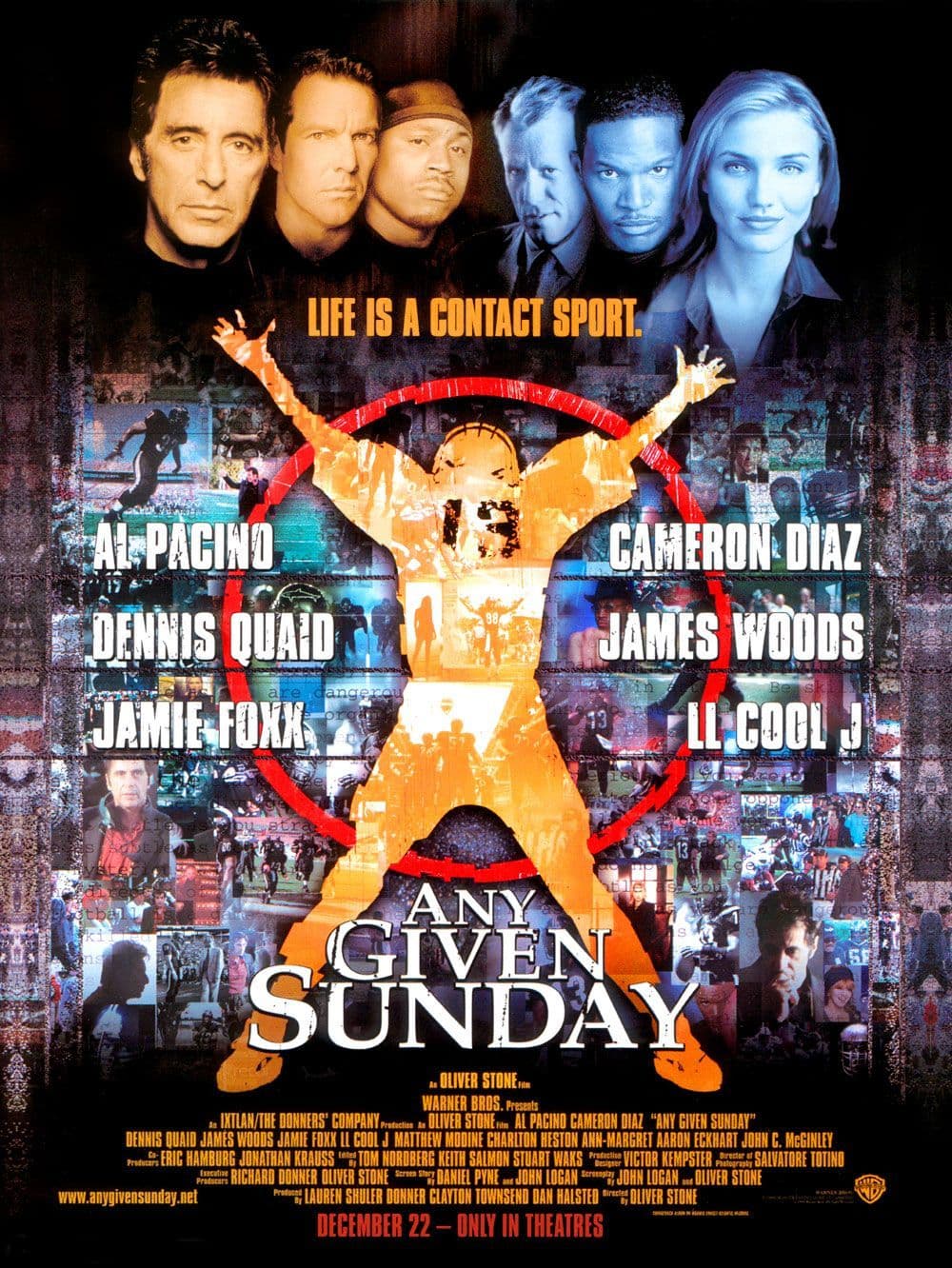
1999 // VHS
Any Given Sunday
Al Pacino's coach anchors the chaos of a film about football turned into product — loud, messy and oddly persuasive.