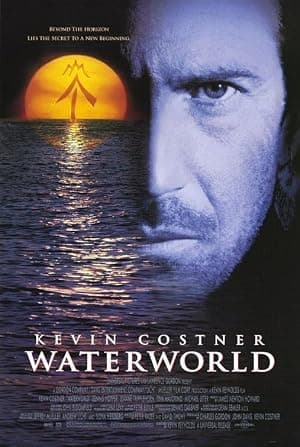
Waterworld
A soaked epic about survival, maps on backs and a reluctant loner who becomes everybody's last hope.
// The setup
PLAYBACK STARTED
Waterworld is the sort of movie you remember as a peculiar splash of the 1990s: a grimly inventive premise, enormous floating sets and a loner who'd rather be left alone. Revisit it and the real reason it still turns heads isn’t the budget headlines — it’s the Mariner and the strange, stubborn heart beating under all that salt spray.
THE MOVIE
The Mariner is still the reason this movie works
Start with the obvious: this is a film about a world where the ice caps have melted and most land is gone. Communities survive on floating atolls and boats, which gives Kevin Reynolds a bleak, locked-down stage on which to set his action.
Into that wet world comes the Mariner — a partly amphibious loner who keeps to himself until chance and bad manners shove him into caring for a woman, Helen, and her little ward, Enola. That dynamic — a survival-first man gradually dragged into a protective role — is what keeps the film honest when the sea is doing something showy.
So yes, Waterworld has big set pieces, a peculiar premise and a run time that demands attention. But what people still talk about is the human shape at its centre: Kevin Costner’s Mariner, the reluctant glue that holds this floating mess of a world together.
THE SETUP
The idea that sets Waterworld in motion
The engine of Waterworld is pleasingly simple: the planet is mostly ocean, people cling to floating communities, and legend says there’s a place called Dryland somewhere beneath the waves.
Plotwise the film centres on Enola, who carries a tattoo on her back that encodes the coordinates to that mythical Dryland. That single piece of ink turns the little girl into a treasure everyone is willing to fight for.
The Mariner only becomes part of the chase after he flees an atoll that imprisons him for being different — he’s partly amphibious, which makes people suspicious. He’s a survivor first; the rest follows.
Reynolds stages that chase with waterborne set pieces — trimarans, jet-skis, seaborne atoll battles — and aerial devices like a Smoker plane and a balloon, which the script uses repeatedly as plot machinery rather than mere spectacle.
THE CHARACTER
Why The Mariner matters
Kevin Costner’s Mariner is the kind of hero who’d rather be a hazard than a handout. He’s built around survival instincts and self-reliance — the practical qualities you’d want if the world had actually turned into a permanent sea.
What makes him memorable isn’t that he’s heroic on cue but that, story-wise, he’s resistant to the very idea of being useful to anyone. Helen and Enola force him into a different script: from loner to protector, slowly and messily.
That found-family thread is threaded through the film: Helen is determined to shield Enola and the secret of the map, and people like Gregor provide the odd technical lifeline — gadgets, a balloon — that let the Mariner get from one problem to the next.
The Mariner matters because the film’s emotional promise hinges on him learning to care. Without that reluctant-parenthood arc, all the chases and floating sets risk being stylish noise.
UNDER THE SURFACE
Waterworld has more on its mind than the plot suggests
On the surface it’s a chase movie; underneath it’s a picture of an ecological collapse and the social fallout that follows. The melted ice caps aren’t just a backdrop — they have consequences for how people organise, trade and trust one another.
The film is centrally propelled by the myth of Dryland. That search for a home — for some place that resembles the world that was lost — gives the story its hope and its greed; everyone wants the map because land means power and safety.
From there the film asks a very pragmatic question: do you survive as an island, or do you survive as part of a group? Waterworld keeps returning to the tension between survival instincts and the compromises of community.
Resource scarcity and commodification thread through the world-building. The map on Enola’s back, fuel for the Smokers and the protections of the atolls all show how basic needs become currency in a drowned world.
THE FILMMAKING
How Waterworld was put together
Waterworld’s production reads like the kind of movie shoot that invites column inches: it needed experienced collaborators to manage its scale. The credits list Dean Semler as director of photography and Dennis Gassner as production designer — names that signal a film with technical ambition.
Peter Boyle is credited as the editor, which is worth noting because a project of this size relies on a steady editorial hand to stitch action, character moments and the many practical beats together.
You don’t need to be a camera nerd to see that these choices matter. The people behind the lens and the sets are the ones responsible for making a world of floating structures feel like a coherent place rather than a series of props.
In short: Reynolds brought in a seasoned team to handle a very demanding brief, and those behind-the-scenes roles shape the film’s identity almost as much as the cast.
PRACTICAL EFFECTS
The effects work that gives Waterworld its physical personality
This is very much a physical movie. The production built full-scale floating structures — large atoll sets — and custom trimarans for the closeups, which gives many sequences a tactile, occasionally perilous feel.
One of the film’s talking points is a 60-foot transforming trimaran. Two versions were built: a racing trimaran for distance shots and an effects-laden closeup version. That practical approach dictated how action could be staged on the water.
Creature- and model-work appear too: fake sharks and related model elements were used, with additional footage added during post-production. Those choices underline Reynolds’s preference for concrete, on-set solutions when possible.
Put plainly, the film’s physicality comes from doing things in the water for real — and then shaping the footage into set pieces that ask the audience to buy into a dangerous, sodden reality.
PURE 80S
Waterworld could not belong to any other decade
Waterworld arrived in the mid-1990s, a period when Hollywood was willing to spend big on spectacle. The production’s ballooning costs became a major industry story in 1994–1995, which is part of how the film entered the public imagination.
That spending makes sense when you remember what the movie was trying to do: stage large-scale action on water, build full-size floating sets and move dozens of performers through a physical, unstable environment.
The era mattered because studios were prepared to back directors on the basis of an idea and an ambition. Waterworld is one of those projects where the scale itself is part of the pitch.
So while it wears its moment in print stories about budgets and delays, the film’s mid-90s origins also explain why it looks and feels like a particular kind of Hollywood gamble.
WATCHING IT NOW
What has aged — and what hasn't
Two elements survive a modern re-watch cleanly. First, the search for Dryland still works as a dramatic engine: the idea of a lost home keeps the film's stakes simple and recognisable.
Second, the found-family thread — the Mariner gradually accepting responsibility for Enola and, to a lesser extent, for Helen — remains emotionally straightforward. Those relational beats don’t need slick effects to register.
Viewed today, Waterworld’s basic promises are still intelligible: a bleak ecology, a child with a secret map, and a hardened survivor who learns to be human again. Those are narrative building blocks that don’t rot with time.
What ages oddly is anything tied to the production mythology rather than the story: the behind-the-scenes headlines can distract, but they don’t change whether the core themes land in the film itself.
THE LEGACY
Why Waterworld still matters
Waterworld didn’t vanish after the credits. It spawned a novelisation and a four-issue comic-book sequel miniseries, which gave the story a life beyond the film itself.
There’s also a very literal legacy you can visit: Universal turned the movie into a long-running live stunt show attraction called WaterWorld, which opened in 1995 and later at international parks.
On the awards front the film picked up technical recognition, including a BAFTA nomination for visual effects and an Academy Award nomination in the sound category — reminders that parts of the production were admired even if the larger story around the shoot dominated headlines.
Those threads — tie-in media, a theme-park presence and technical nominations — explain why Waterworld keeps cropping up in conversations about adventurous, if imperfect, 1990s filmmaking.
THE VERDICT
Does Waterworld still hold up?
Yes — but with a rider. If you come for a tidy, modest blockbuster you’ll be annoyed by the scale and the 135-minute running time. If you come for a noisy, idea-driven action movie with an uneasy heart, you’ll find things to admire.
The central mechanics still work: a drowned planet; a girl whose tattoo maps Dryland; the Smokers and their leader, the Deacon, pushing the Mariner and everyone around him into repeated high-stakes confrontations. Those pieces create clear, readable stakes.
The film’s repeated use of water-based set pieces — trimarans, jet-skis, atoll battles and aerial devices — gives it a distinctive kinetic flavour. And the plot’s human core — a survival-first loner drawn into protecting Helen and Enola — is straightforward enough to carry the spectacle.
So should you watch it now? If you’re curious about a 1990s take on ecological collapse, or you want to see a peculiar, costly attempt to stage an original blockbuster on water, it’s worth the time. For all its production baggage, Waterworld still centers on a single useful thing: the Mariner, who gives the film its stubborn, salt-stiff backbone.
Share this movie
// Keep watching
More movies from the 90s
If Waterworld is your kind of movie, there's plenty more on the shelves worth rewinding.
1995 // VHS
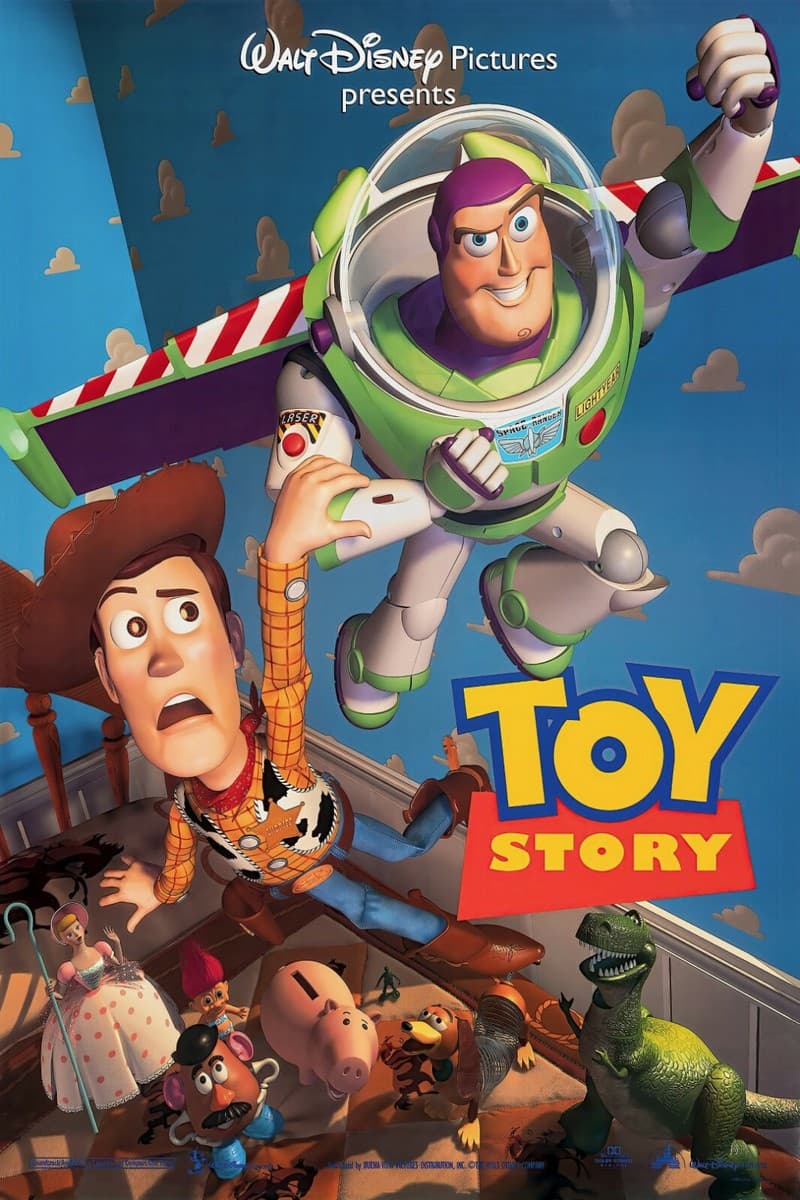
Toy Story
A pull‑string cowboy, a deluded space ranger and a small, very particular war over being loved.
1999 // VHS
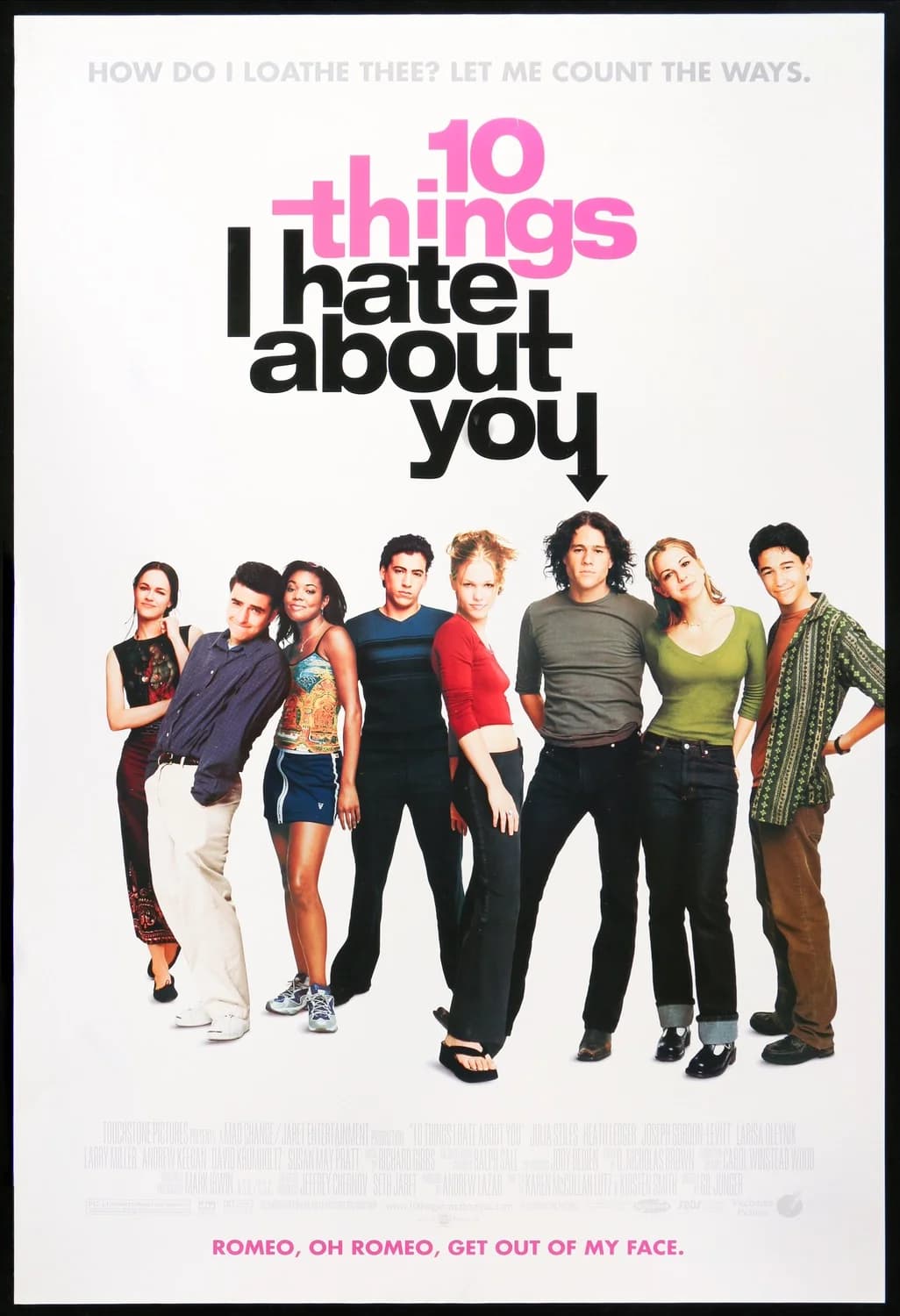
10 Things I Hate About You
Sibling rules, a rooftop serenade and one very stubborn Kat — Shakespeare in a school corridor.
1999 // VHS
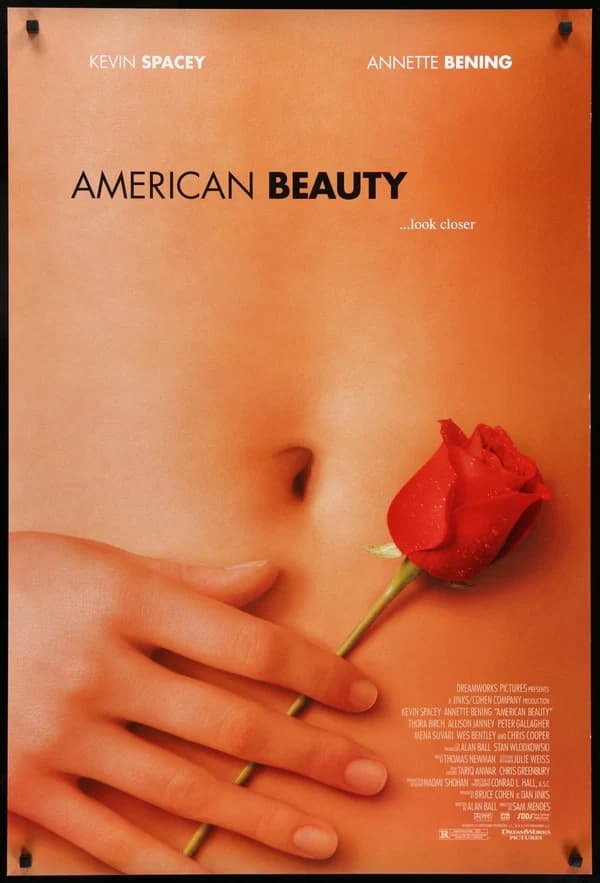
American Beauty
Lester Burnham, suburban rot and a midlife argument that still stings.