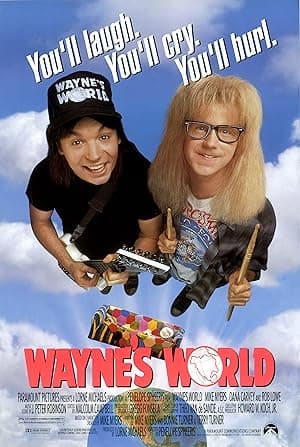
Wayne's World
Fandom, friendship and the terrifying moment someone offers to make your hobby into a business.
// The setup
PLAYBACK STARTED
Remember the bit where three bored people in a car nail every bar of "Bohemian Rhapsody"? That set-piece tells you almost everything Wayne's World wants to be: loud, affectionate and utterly certain that pop culture matters. Directed by Penelope Spheeris and built around Mike Myers’s Wayne, the film is a small, noisy argument for why keeping your mates matters more than a TV deal.
THE MOVIE
Wayne Campbell is still the reason this movie works
Wayne's World is, at base, a show about two mates who happen to make a late-night public-access cable programme in Aurora, Illinois. That simple setup — two guys with a camera, a sofa and an audience of no-one-very-important — is where the movie finds its energy.
Everything the plot throws at them grows out of that modest premise. A slick television producer turning up with the promise of a commercial version of the show is the exact kind of temptation that forces Wayne to choose between what’s popular and what’s honest; and those choices drive the film forward.
If you want a short explanation for why people still talk about this film, start with Wayne: the charismatic, pop-culture–obsessed co‑host whose career and romantic choices move the story. Penelope Spheeris directs the chaos around him like a referee who knows which bits the audience will cheer.
THE SETUP
The idea that sets Wayne's World in motion
You can explain Wayne's World without listing every gag: two friends run a DIY public-access show and they’re happy until television shows up. That intrusion — the offer to professionalise something grassroots — is the engine that tests loyalties and tastes.
The film keeps its mechanics pleasingly simple. The public‑access framing gives the movie a home base, recurring mock‑interview bits break the action into punchy beats, and musical set pieces punctuate emotional and comic turns.
Because the show is built from pop culture, music isn’t decoration; it’s part of how characters meet and make choices. The car lip‑sync/headbanging sequence with Queen’s "Bohemian Rhapsody" is not a throwaway gag but a piece of storytelling that connects characters to each other and to an audience.
That lean structure — local show, attention from TV, the question of whether to sell out — keeps the story clear and lets the comedy land without getting lost in complication.
THE CHARACTER
Why Wayne Campbell matters
Wayne Campbell is written and played as the show’s beating heart. He’s the bloke who names the jokes, invites the guests and thinks in riffs of pop‑culture reference; his choices about work and love are what the film watches most closely.
That personality makes him a useful point-of-view: through Wayne, the audience understands why the public‑access show feels important and why the idea of selling it to TV feels like a betrayal. He’s not just a laugh track — he’s the character making the call when things get complicated.
Garth sits beside him as a balancing force: shy, technically minded and loyal. That contrast matters because it keeps the film honest; when Wayne wobbles, Garth’s steadiness reminds the audience of what’s at stake.
It helps that Wayne began life on television and that Mike Myers brought the character into the movie, so the film feels like an extended version of something familiar rather than a wholesale reinvention.
UNDER THE SURFACE
Wayne's World has more on its mind than the plot suggests
On the surface it’s a comedy about daft sketches and big riffs. Underneath, it’s chiefly interested in the way friendship holds up when money and ambition appear. The movie keeps circling back to the idea that long‑term mateship is worth awkward conversations and hard choices.
That feeds directly into the selling‑out question. Turning a grassroots project into something professional isn’t presented as a neat good/bad dilemma; it’s a source of tension between remaining authentic and chasing a bigger platform.
Pop‑culture fandom and music play a crucial role too: the characters don’t just like music, they use it to form identity. Those shared tastes are the glue that binds Wayne and Garth and explain why losing that DIY space feels like losing a piece of themselves.
And of course there’s ambition versus loyalty: when career opportunities touch personal relationships, the film prefers the messy reality of loyalty over any tidy moralising. It’s a film that trusts its characters to make the wrong choice before learning from it.
PURE 80S
Wayne's World could not belong to any other decade
Wayne's World arrived as part of a specific early‑1990s moment: films taking popular sketch characters and stretching them into features. That history explains a lot about its tone — it feels like a longer Saturday Night Live episode, not a conventional movie.
Because it began on television, the film keeps TV habits — quick beats, character riffs and recurring gags — while trying to justify those habits with a simple plot. That hybrid is exactly what other sketch‑to‑film adaptations were aiming for at the time.
This is the era when familiar TV faces were bankable enough to carry a short, lively film. Wayne’s World wears that lineage on its sleeve and leans into the audience’s knowledge of the characters rather than pretending they’re brand new.
Seen that way, the movie is less a period piece and more a snapshot of a moment in Hollywood where TV comedy could make a noisy, affectionate leap onto the big screen.
WATCHING IT NOW
What has aged — and what hasn't
Some parts of the movie still feel immediate. The friendship at the core — two people who’ve held a project together — is timeless; that sort of loyalty translates as well now as it did then.
The movie’s origins on television are both a strength and a limit. Knowing Wayne came from a sketch explains the film’s short, punchy rhythms, but it also means some jokes sit like TV riffs stretched to feature length rather than fully developed film beats.
Small touches can date the experience: moments built around industry gags — like the running joke about a character’s onscreen surname — can feel more like a wink at contemporaries than universal comedy.
Ultimately, what ages best is the basic idea: if you care about the people who share your late‑night projects, you’ll still feel something in Wayne's World today.
THE LEGACY
Why Wayne's World still matters
One obvious piece of the film’s afterlife is its music: the soundtrack and, notably, the renewed exposure given to Queen’s "Bohemian Rhapsody" after the movie, are measurable parts of its legacy.
It also spawned a direct sequel, a tidy sign that the characters had enough life to return to the screen and that audiences wanted more of their particular brand of nonsense.
More broadly, the film’s commercial performance helped open the door for further feature versions of Saturday Night Live characters produced through Lorne Michaels’s Broadway Video. In that sense, Wayne's World played a practical role in a certain business logic of 1990s comedy.
So its memory isn’t just nostalgia; it’s also a record of how television characters moved into cinema during that moment.
THE VERDICT
Does Wayne's World still hold up?
Yes — with a caveat. If you enjoy the shorthand of TV sketches expanded into a breezy, 94‑minute film, Wayne's World delivers: the public‑access premise, the arrival of a slick producer and the tension about selling out keep the stakes small and clear.
The film’s structure — public‑access framing, recurring mock interviews and musical moments — keeps things moving, and the car lip‑sync to "Bohemian Rhapsody" still reads as an honest, giddy love letter to fandom.
It also helps that the story is about people first: Wayne’s choices, Garth’s steadiness and Cassandra Wong’s position as a working rock singer give the comedy something to orbit rather than letting jokes exist on air alone.
If you’re curious, watch it for the characters and the music. It’s not flawless, but it remains a warm, noisy reminder that sometimes the thing you should protect isn’t a show, it’s the person who helped you make it.
Share this movie
// Keep watching
More movies from the 90s
If Wayne's World is your kind of movie, there's plenty more on the shelves worth rewinding.
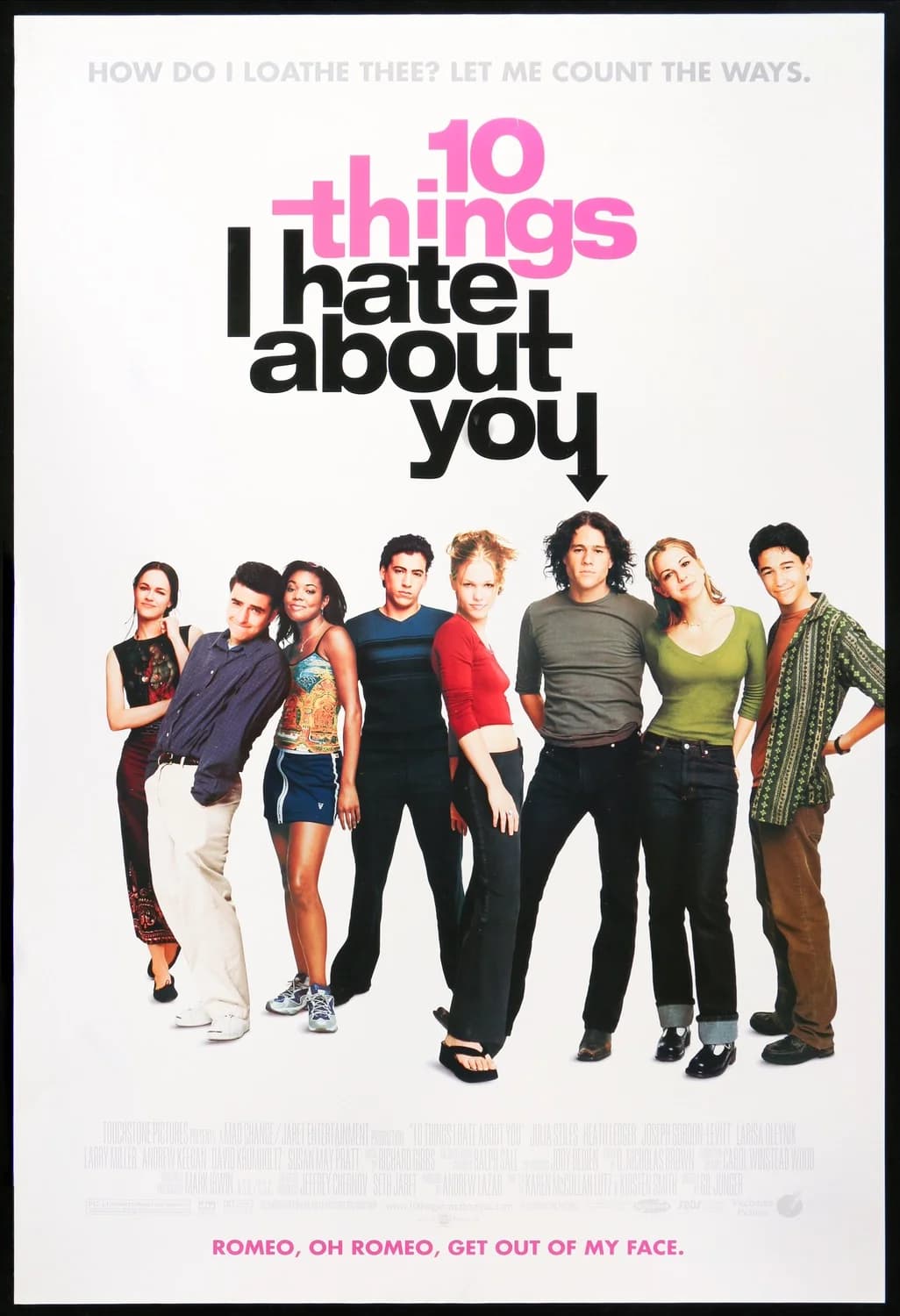
1999 // VHS
10 Things I Hate About You
Sibling rules, a rooftop serenade and one very stubborn Kat — Shakespeare in a school corridor.
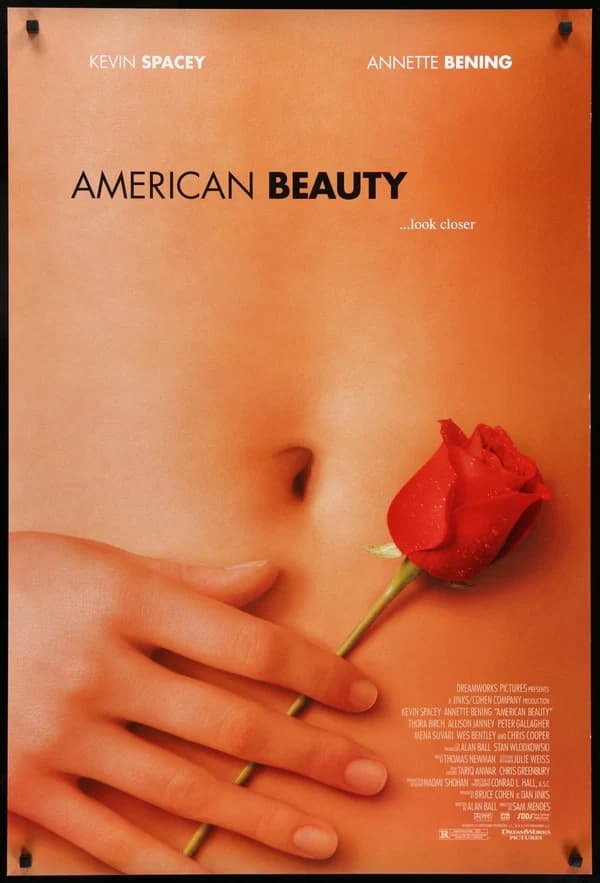
1999 // VHS
American Beauty
Lester Burnham, suburban rot and a midlife argument that still stings.
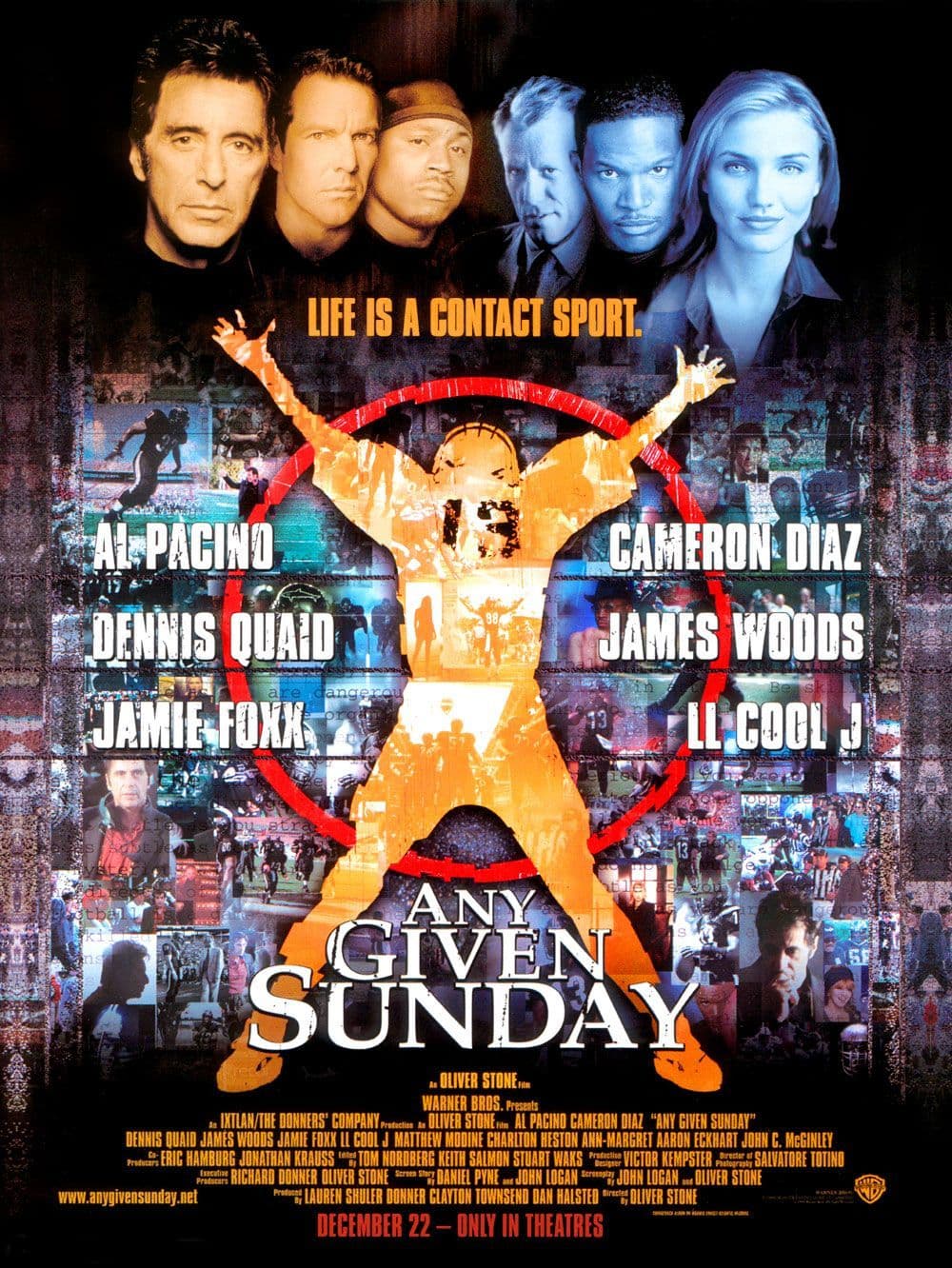
1999 // VHS
Any Given Sunday
Al Pacino's coach anchors the chaos of a film about football turned into product — loud, messy and oddly persuasive.