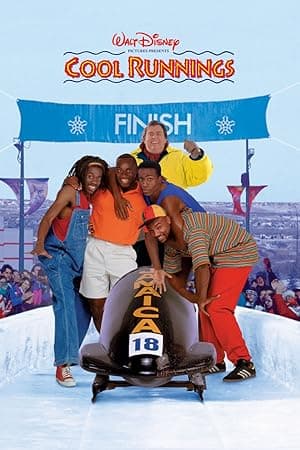
Cool Runnings
A sprinter with Olympic-sized stubbornness, a disgraced coach, and a very unlikely dream.
// The setup
PLAYBACK STARTED
Cool Runnings still opens with the simple, irresistible idea that a Jamaican sprinter who misses out on the summer trials will try to reach the Winter Olympics by forming a four-man bobsled team. It’s a bright, family-friendly gamble — equal parts underdog story and redemption tale — directed by Jon Turteltaub and anchored by Derice Bannock’s refusal to accept ‘no’ for an answer.
THE MOVIE
Derice Bannock is still the reason this movie works
You can summarise Cool Runnings as a fish-out-of-water comedy dressed in Olympic kit, but that understates why people keep returning to it. At its centre is Derice Bannock — a sprinter who, after failing to qualify at the national summer trials, chooses a ridiculous-looking route to the Games: form a four-man bobsled team and go to the Winter Olympics anyway.
That stubborn, single-minded decision sets the film’s tone. Derice recruits a disgraced former champion, Irving 'Irv' Blitzer, to coach them, and the story is full of the sorts of obstacles you expect from a Disney sports picture: no snow where they come from, questionable kit, and institutional sideways glances. The mix of earnest determination and good-humoured absurdity is what lets the movie skate between comedy, sport and family drama over a brisk 98 minutes.
Jon Turteltaub directs with a light touch, and the cast — led by Leon Robinson as Derice and John Candy as Irv — gives the whole enterprise a warmth that helped the film become a commercial success on release. It’s also a deliberately fictionalised, family-oriented take on a real story, which explains why the film sometimes favours emotional clarity over strict historical accuracy.
THE SETUP
The idea that sets Cool Runnings in motion
Cool Runnings is built on a neat dramatic inversion: take athletes who belong to a hot-weather island and put them in the dead of a winter sport. The screenplay — credited to Lynn Siefert, Tommy Swerdlow and Michael Goldberg, with story work from Siefert and Michael Ritchie — frames that inversion as both comic premise and moral test.
Because the film knowingly plays with legend, it operates in the space of myth versus history. It’s not trying to be a documentary; instead it uses the idea of an improbable team to ask bigger, straightforward questions about courage and belief.
That choice explains why the plot moves briskly. The screenplay doesn’t get bogged down in technicalities; it sets up a clear, emotional throughline and then uses the characters’ mismatched skills and personalities to fuel both jokes and stakes.
In short: the setup works because the premise feels both ridiculous and obvious at once. It’s the sort of improbable underdog idea that invites the audience to root for the attempt, even when victory seems unlikely.
THE CHARACTER
Why Derice Bannock matters
Derice Bannock isn’t the loudest presence in Cool Runnings, but he is the clearest. Played by Leon Robinson, Derice is the team’s driver and its moral compass: he wants to get to the Olympics because he was denied at the summer trials and refuses to accept that as an endpoint.
That refusal is what makes him memorable. He’s the steady, determined centre that allows the film to swing between joke and jeopardy without losing focus. Everything the team tries — the schemes, the training, the theatrical showmanship — stems from his single-minded aim to qualify.
Because Cool Runnings is pitched as a family picture, Derice’s determination is expressed in unambiguous terms. The story keeps his motivations straightforward, which makes his leadership feel both heroic and accessible to younger viewers.
Finally, Derice matters because he gives the film purpose. Without his insistence, the team’s antics would be charming but hollow; with him, they become a small-scale parable about persistence and the stubbornness it takes to make an unlikely dream plausible.
THE PERFORMANCE
Why Leon Robinson's performance matters
Contemporary reviewers singled out Leon Robinson for giving Derice the kind of physical credibility the film needed: if the team’s premise is going to fly, the lead has to feel like a real athlete, not a caricature. That impression keeps the whole thing believable enough for the audience to care.
That doesn’t mean the movie insists on dramatic subtlety; it’s a family sports-comedy, and clarity of character is the priority. Robinson’s portrayal reads as a practical choice by the filmmakers — make Derice convincing so the stakes have weight.
The supporting tone around him matters, too: the screenplay and casting let Derice be the steady point while other characters supply comic relief, conflict and colour. In that balance the performance matters less as a showpiece and more as the glue that holds the story’s emotional logic together.
Put simply: what reviewers noticed — that Robinson projects athletic authority as Derice — is exactly what the film needed to make its central gamble feel like something worth watching.
UNDER THE SURFACE
Cool Runnings has more on its mind than the plot suggests
On the surface it’s an underdog sports comedy. Underneath, the film is asking a few tidy, audience-friendly questions: what happens when people refuse to accept the limits assigned to them, and what does redemption look like when it’s public and oddly theatrical?
Redemption arrives in the story through Irving 'Irv' Blitzer’s arc: a disgraced former champion who gets a second chance working with the team. That dynamic turns the film into more than a collection of jokes — the team gives Irv back some dignity, and he, in turn, offers them the coaching they lack.
Teamwork is another engine. The movie keeps returning to how friendship and collective identity compensate for the group’s lack of tradition and resources. It’s not about a single hero winning; it’s about a group discovering that they, together, can do things others think impossible.
And because the film is a fictionalised take on a real story, it plays with myth versus history: the filmmakers amplify moments for emotional clarity, which suits the family audience it was made for, while also inviting conversation about the difference between truth and the kind of story we tell each other when we need a lift.
PRACTICAL EFFECTS
The effects work that gives Cool Runnings its physical personality
The film’s bobsled sequences feel immediate because the production staged training and racing material on location rather than leaving everything to studio trickery. That hands-on approach gives the physical moments a tactile energy.
For the climactic crash, the filmmakers mixed staged material with archival footage from the real 1988 Olympic run. Intercutting staged shots with real-world images was the deliberate technique used to sell the most dramatic moments.
The result is a blend: staged set pieces for the characters and archival inserts for the high-intensity payoff. That mix lets the film sustain a sense of authenticity while still keeping the narrative firmly in its family-friendly lane.
Overall, the practical choices in how the races were realised served the story’s need for convincing danger without turning the film into a technical exhibition.
PURE 80S
Cool Runnings could not belong to any other decade
Released in 1993, Cool Runnings sits squarely in an early-90s tradition of earnest underdog sports films. It was part of a moment where studios were happy to package moral uplift and character-driven stories for mainstream family audiences.
Jon Turteltaub was still establishing himself in that space — the film followed his earlier studio work on 3 Ninjas — and this kind of mainstream, accessible storytelling was exactly what Disney wanted to promote at the time.
Contemporary critics often grouped Cool Runnings with other earnest sports pictures of the day; films like Rudy and Searching for Bobby Fischer were part of the same cultural conversation, the sort of releases that traded on straightforward aspiration rather than ironic detachment.
That combination of earnestness and studio polish is very much of the early 1990s. The film is unapologetically upbeat, and it wears that quality like a feature rather than a quirk.
WATCHING IT NOW
What has aged — and what hasn't
Cool Runnings remains very watchable as a family movie because its storytelling choices are straightforward and emotionally direct. The film’s family orientation means it aims for clarity over complexity, and that approach tends to travel well across time.
Where the film shows its age is in the way it handles the line between fact and fiction. It’s a knowingly fictionalised take on the real 1988 Jamaican team, and retrospective commentary has pointed out the ways the story was altered for dramatic effect.
That doesn’t kill the film’s pleasures — the commercial success it enjoyed on release and the way many viewers retained affection for it reflect that people respond to its tone and themes — but it does mean modern viewers might watch with a more questioning eye about what’s been fictionalised.
In short: the movie’s heart and humour still work for family audiences, but its status as a dramatisation means it’s best enjoyed as a story about optimism and teamwork rather than as a literal retelling of events.
THE LEGACY
Why Cool Runnings still matters
The film’s immediate legacy is straightforward: it was a substantial commercial success for Disney and it stayed visible enough in the years after release that it became closely associated in the public mind with the real Jamaican bobsled team’s story.
Part of that staying power comes from the film’s soundtrack and tone. The soundtrack release — including the Jimmy Cliff cover of 'I Can See Clearly Now' — entered popular consciousness, giving the movie a musical hook that outlived its theatrical run.
There’s also a bittersweet historical footnote: Cool Runnings was the last John Candy film released during his lifetime. That fact has coloured how some viewers remember the movie, adding a layer of poignancy to Candy’s presence in the supporting cast.
So the film remains remembered both for its crowd-pleasing qualities and for the small, concrete reasons — music, cast moments, and cultural association with the real team — that keep it in circulation.
THE VERDICT
Does Cool Runnings still hold up?
Yes, but with a small qualification. If you want a lean, good-hearted ninety-eight-minute family sports comedy about perseverance, teamwork and second chances, Cool Runnings still delivers. Derice Bannock’s refusal to accept defeat — the plot engine that drives the team to recruit a disgraced coach and battle lack of snow, equipment and funding — remains a tidy and emotionally convincing premise.
The climactic third-run crash and the emotionally triumphant finish that follows play as the movie intends: not an exercise in technical victory but a moment where character and courage win the day. That choice fits the film’s family orientation and the moral clarity the screenplay aims for.
Contemporary notices that highlighted Leon Robinson’s athletic presence as Derice and Doug E. Doug’s likability as Sanka were right to point to the film’s necessary balances: believable leadership, comic warmth, and a sense of collective identity. Those elements keep the story moving and keep audiences rooting for the team.
So watch it for the optimism and the oddball joy of the premise. Don’t watch it expecting a documentary about the 1988 team. Consider it a small, expertly pitched fairy tale of sport: improbably true to the feeling of what it takes to try, even when the odds are ridiculous.
Share this movie
// Keep watching
More movies from the 90s
If Cool Runnings is your kind of movie, there's plenty more on the shelves worth rewinding.

1993 // VHS
Schindler's List
A businessman who keeps a list — and keeps changing the kind of man he is.

1999 // VHS
10 Things I Hate About You
Sibling rules, a rooftop serenade and one very stubborn Kat — Shakespeare in a school corridor.

1999 // VHS
American Beauty
Lester Burnham, suburban rot and a midlife argument that still stings.