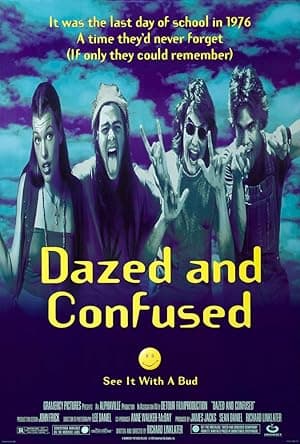
Dazed and Confused
A night of hazing, mixtapes and one senior's impossible promise — and yes, Pink is the hinge.
// The setup
PLAYBACK STARTED
Dazed and Confused isn't a tidy plot so much as a carefully arranged mess of people, places and rock songs. Richard Linklater assembled an ensemble of teenagers on the last day of school in 1976 and let the evening unfold in overlapping vignettes — which is why Randall 'Pink' Floyd's clean-living pledge feels like the movie's moral fulcrum. If you're thinking about whether it still holds up, start with the pledge and the party; everything else follows.
THE MOVIE
Randall "Pink" Floyd is still the reason this movie works
There are dozens of small scenes that people remember from Dazed and Confused — beer-fuelled conversations, cars with radios blasting, that peculiar teenage lope across parking-lot asphalt. But what keeps the film being talked about is a quieter, repeated pressure: Randall 'Pink' Floyd being asked to sign a clean-living pledge for his football team.
Linklater arranges the night as interlocking vignettes rather than a single linear adventure, so Pink's dilemma keeps returning in different contexts. He's a senior who wants to belong but bristles at being told which freedoms to give up; that tug-of-war crops up again and again as the evening moves between drive-ins, house parties and the moon-tower keg.
That tension — rites of passage meeting peer pressure and the messy business of choice — is why the film feels worth revisiting. It's not just nostalgia for a 1976 setting; it's a film about how one decision circles back and reshapes a night's worth of small, human moments.
THE SETUP
The idea that sets Dazed and Confused in motion
At heart the film is simple: a last day of school and the night that follows, observed in short, overlapping scenes rather than a single hero's journey. That structure makes room for lots of characters and small stories to rub up against each other.
Two threads keep appearing. One follows Randall 'Pink' Floyd as he faces repeated requests to sign a pledge that would force him into a clean-living code for the football team — an ethical tightrope that resurfaces through the evening. The other follows incoming ninth-graders being hazed by older students, a ritual that kicks off several sequences and gives the night some real stakes.
Linklater uses places — the drive-in, the Top Notch burger stop, the moon-tower keg and the football field — as anchors. They move the ensemble between incidents, so the film feels like a single long evening even as it skips between different groups and small crises.
Because the movie is built from vignettes, it tolerates loose ends and conversational digressions; that’s the point. It’s less about tidy resolution and more about the texture of being young and unsettled on a particular night.
THE PERFORMANCE
Why Matthew McConaughey's performance matters
Matthew McConaughey's David Wooderson wasn't a background extra who happened to stand out; contemporary reviewers pointed to him as a notable part of the movie, and later coverage treats the role as the one that opened doors for him.
A key detail behind that attention is improvisation. McConaughey contributed unscripted lines — including the bit about 'it's about livin'' — and that looseness helped Wooderson feel like someone who belonged to the night rather than a piece of plot machinery.
Within the film's conversational, talk-driven fabric, those improvised moments provide memorable punctuation. They anchor a particular kind of late-night attitude that contrasts with Pink's more cautious dilemma.
So even without turning the section into an actor biography, the reliable evidence says this performance mattered because it injected spontaneous, memorable colour into an already chatty ensemble.
UNDER THE SURFACE
Dazed and Confused has more on its mind than the plot suggests
Take away the soundtrack and the hair and you still have a movie about young people being pushed into rites of passage. Signing a pledge, getting hazed, choosing who to hang with — these are small tests that feel like life-or-death at the time.
Peer pressure and hazing are not incidental set dressing; they are the mechanisms Linklater uses to make the choices matter. The incoming ninth-graders' rituals and Pink's recurring pledge both force characters to weigh belonging against personal conscience.
Nostalgia sits over all of it like warm light: the film stages 1976 as a remembered social world rather than a museum-piece historical recreation. That remembered quality lets the film be affectionate without being sentimental — it remembers the feeling more than the facts.
Finally, there’s the ongoing tug between youthful rebellion and conformity. Everyone in the ensemble performs, in one way or another, the tricky business of deciding whether to fit in or push back — and that tension keeps the night feeling purposeful even when nothing earth-shattering happens.
THE FILMMAKING
How Dazed and Confused was put together
Linklater’s approach meant the raw footage went in one direction and the edit pulled it back into another. The movie began life as a very long assembly and was pared down substantially in the cutting room.
In concrete terms, the film's rough assembly ran to roughly 165 minutes before being reduced to the released roughly 102- to 103-minute version. That’s a big pruning job, and it explains why the film feels both richly populated and tightly shaped.
The edit choices enforce the vignette logic: scenes are kept long enough to breathe when it helps the mood, but the overall shape refuses to linger where it would weaken momentum.
So a lot of Dazed and Confused's personality lives in the edit — the balance between loose, improvisational moments and a running time that keeps the night moving.
PURE 80S
Dazed and Confused could not belong to any other decade
Dazed and Confused arrived in 1993 out of the early-90s indie wave that followed Linklater’s breakthrough with Slacker. It sits in that space between festival discovery and modest studio backing, the sort of film that the era’s festival circuit loved and that leaned on a limited theatrical release to find its audience.
There’s also a distinctly 1990s curiosity in looking back at the 1970s: the film participates in the decade’s interest in retrospective, coming-of-age stories that treat an earlier era as a stage for youthful rites.
Finally, the cast itself points to a particular 1990s pattern — an ensemble of relative unknowns who, in the years that followed, moved into mainstream careers. That pipeline from indie ensemble to later stardom is part of how the film is talked about within 1990s film culture.
Taken together, those things make Dazed and Confused feel like a film of its moment: made by an indie-leaning director, premiered at festivals, then released into a marketplace primed for cult discovery.
WATCHING IT NOW
What has aged — and what hasn't
As a teen movie about youthful rebellion versus conformity, Dazed and Confused still speaks to the way groups police behaviour and how rites of passage can be both silly and serious. Those core tensions are timeless enough that modern viewers can still recognise the dynamics on screen.
The film's single-evening, ensemble structure — often compared to American Graffiti — also helps it age well. Because it never promises tidy arcs for everyone, it can survive a few scenes that feel of their time without losing the overall mood.
Set in May 1976 and played as a remembered night, the film deliberately leans on nostalgia and fallible memory. That makes the period detail feel subjective rather than archival, which keeps it from feeling merely dated.
Where it may feel less comfortable is in tolerating certain hazing rituals as part of the night's texture; those sequences are central to the film's setup, but modern eyes will watch them with a different mix of curiosity and discomfort.
THE LEGACY
Why Dazed and Confused still matters
The film found a lasting life as a cult favourite and has settled into lists of essential coming-of-age and high-school films from the 1990s. That afterlife is partly because the movie refuses to tidy itself into a single lesson — it preserves a mood instead.
It also served as a breakout vehicle for several cast members; commentators and programmers point to the movie when tracing how certain careers began, with Matthew McConaughey often mentioned as a clear example.
Criterion’s involvement — a special edition in 2006 and a new 4K restoration/4K UHD supervised by Linklater and Lee Daniel in 2023, plus a 30th-anniversary theatrical re-release in 2024 — is concrete evidence that the film continues to be curated and re-presented for new audiences.
Structurally and tonally, critics and historians regularly set it alongside American Graffiti and similar night-in-the-life ensemble films when discussing its place in film history; that’s a frank way of saying people keep returning to it because the form still resonates.
THE VERDICT
Does Dazed and Confused still hold up?
Yes — with a small, clear rider. If you want a tidy coming-of-age morality play, this isn’t it. But if you want a well-made mosaic of a single night where a few repeated tensions (Pink’s pledge, incoming freshmen hazing) give emotional shape to meandering conversation, it still works.
Linklater compresses a lot into one evening — overlapping scenes, crossovers between cliques, and location-based anchors like the drive-in, the moon-tower keg and the football field — and that compression is what gives otherwise small moments their weight.
Jason London’s Randall 'Pink' Floyd remains central because his recurring pledge dilemma keeps nudging the film towards something that feels consequential. Wiley Wiggins’s Mitch sits in the story as a viewpoint into that world, and Matthew McConaughey’s improvised Wooderson provides the kind of late-night punctuation that sharpens the film’s tone.
So watch it for the moods, the small moral rubs and the way an apparently loose night of teenage life can still add up to something clear-eyed about belonging and choices. It's a night out that feels like a memory — often hazy, occasionally uncomfortable, and frequently worth revisiting.
Share this movie
// Keep watching
More movies from the 90s
If Dazed and Confused is your kind of movie, there's plenty more on the shelves worth rewinding.
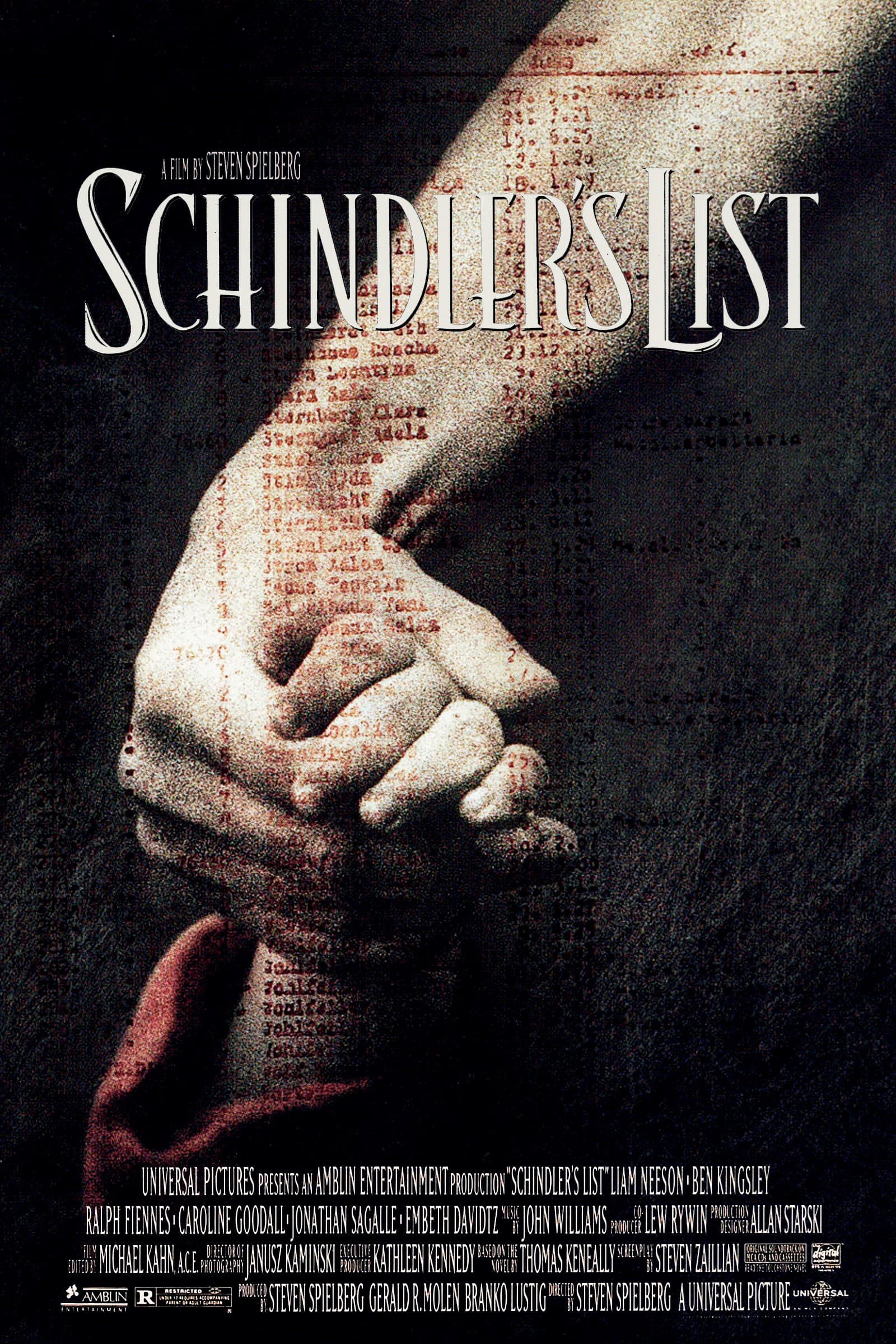
1993 // VHS
Schindler's List
A businessman who keeps a list — and keeps changing the kind of man he is.
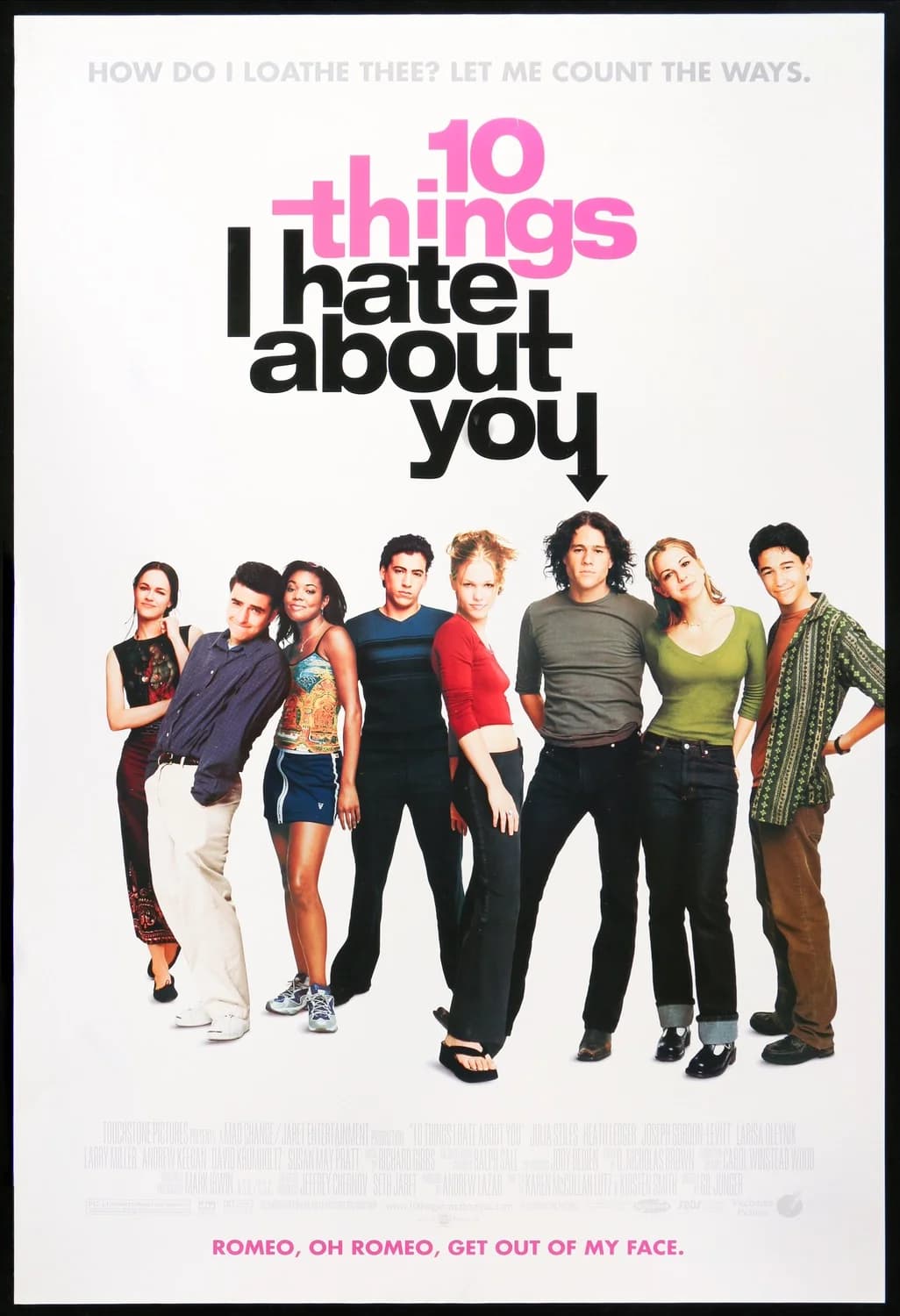
1999 // VHS
10 Things I Hate About You
Sibling rules, a rooftop serenade and one very stubborn Kat — Shakespeare in a school corridor.
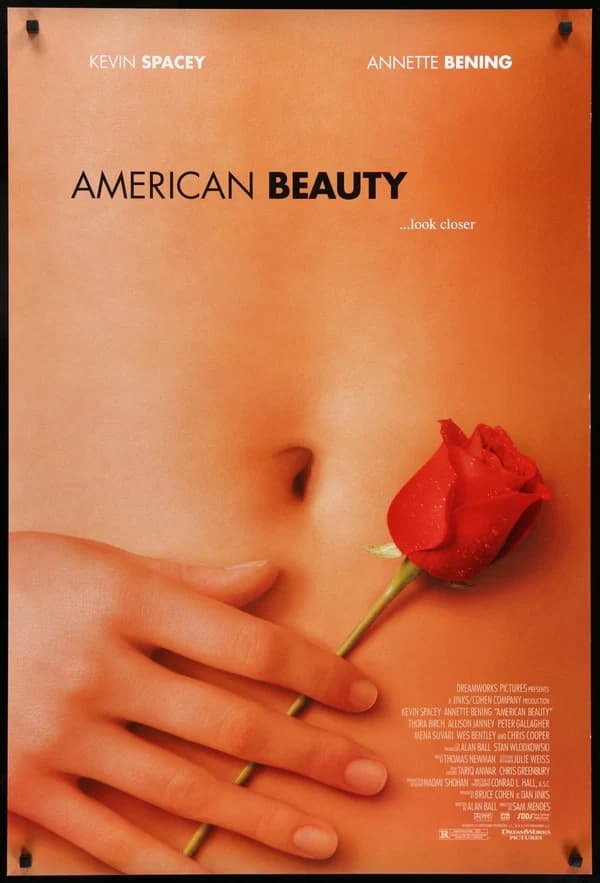
1999 // VHS
American Beauty
Lester Burnham, suburban rot and a midlife argument that still stings.