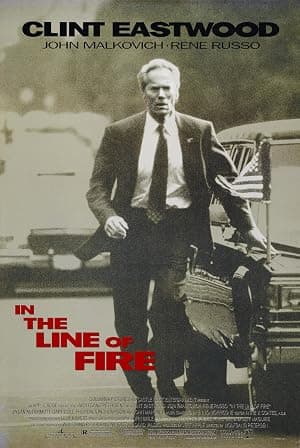
In the Line of Fire
A grief‑haunted secret agent, a clever would‑be assassin and a thriller that still centres on character as much as bullets.
// The setup
PLAYBACK STARTED
If you remember one thing about In the Line of Fire, it's probably Clint Eastwood's haunted, stubborn presence – a man carrying a public job and a private failure. Wolfgang Petersen's 1993 thriller rigs a proper cat‑and‑mouse between that guilt‑ridden agent and a mocking, resourceful antagonist, then makes the chase about more than the chase. It's the kind of crowd‑pleasing studio movie that still has something to say.
THE MOVIE
Secret Service Agent Frank Horrigan is still the reason this movie works
In the Line of Fire sets its stakes on a simple but effective idea: a veteran Secret Service agent discovers a lodger whose behaviour suggests he's planning to kill the President — and that lodger soon phones to taunt him. That premise gives the film a nervous, intimate energy because the danger is pointed directly at the protagonist.
Clint Eastwood plays the agent, Frank Horrigan, and the whole film keeps returning to why this particular man has been singled out. Horrigan isn't just doing his job; he's carrying the weight of being on duty the day John F. Kennedy was shot, and the story gives him a very visible need for redemption. That guilt colours everything he does.
Wolfgang Petersen directs with an eye for plain tension rather than theatrical flourish, and John Malkovich appears as the mysterious antagonist who delights in making the game personal. Between the compact 123‑minute running time and the film's insistence on doing the cat‑and‑mouse as a psychological duel, you end up with a thriller that's as interested in people as it is in plot mechanics.
THE SETUP
The idea that sets In the Line of Fire in motion
The film's engine is straightforward: Horrigan uncovers a lodger whose possessions and behaviour point toward a planned political assassination, and the man — who styles himself 'Booth' among other names — makes the challenge explicitly personal. That single discovery kicks off the investigation.
What keeps the movie moving is the psychological contest between Horrigan, a veteran who still haunted by his presence at Kennedy’s assassination, and Mitch Leary, a former intelligence operative turned would‑be assassin. It's less about a sprawling conspiracy and more about two men trying to outthink and outlast one another.
The story lets Leary use aliases, disguises, and clever improvisation to smuggle weapons and stay a step ahead, while the Secret Service and the FBI run up against jurisdictional limits. Those practical complications do two things: they give the plot believable obstacles and underline the isolation Horrigan feels within the institution.
Importantly, the JFK backstory is used as motive and emotional fuel for Horrigan rather than some alternate history trick — the film keeps its focus on who this man is now and what he thinks he can fix by stopping another killer.
THE CHARACTER
Why Secret Service Agent Frank Horrigan matters
Frank Horrigan matters because the movie never lets him be generic. He's an institutional man — surrounded by younger agents, rubbed the wrong way by superiors — and yet everything filters back to a private failure he can't shrug off. That tension between job and personal guilt gives the thriller an emotional anchor.
His relationships with subordinates illustrate the friction between experience and protocol; he's a lone figure inside an organisation built for collective discipline. That loneliness is the film's subtle motor: it's why the antagonist goes after him, and why Horrigan treats the case as a way to settle more than one score.
The film's flashbacks and memory work required a particular technical solution: the production digitally composited Clint Eastwood into archival 1960s JFK footage to make those sequences feel connected to Horrigan's past. Those moments are reminders of the failure he carries and why stopping this new threat is more than professional pride.
Finally, the movie's publicity and contemporary coverage made the Eastwood–Malkovich pairing a talking point, which helps explain why the character never feels isolated from the film's larger dramatic duel. Horrigan exists inside a match the picture wants you to watch closely.
THE PERFORMANCE
Why John Malkovich's performance matters
John Malkovich's work in the film drew sustained critical attention at the time, with major awards recognition that kept the character in the conversation long after the credits. That kind of attention matters because it signals the role plays a structural part in the film's tension rather than merely supplying a villain of the week.
The casting turns the antagonist into more than a plot device: him being singled out as Horrigan's intellectual and moral opposite gives the cat‑and‑mouse stakes a sharper edge. Contemporary awards nominations are a clear marker that Malkovich's portrayal contributed heavily to the movie being talked about.
UNDER THE SURFACE
In the Line of Fire has more on its mind than the plot suggests
On the surface it's a political thriller. Underneath, the film repeatedly returns to guilt and the search for redemption: Horrigan isn't mainly trying to protect the President because of duty, he's trying to make right a past failure.
Closely linked is a sense of aging and obsolescence. The picture stages generational friction at work — younger agents, new procedures — and asks what a veteran who feels left behind does with the skills and conscience he still possesses.
That feeds into a steady tension between duty and trauma. Horrigan's professional responsibilities are constantly refracted through his private wounds, which makes his choices feel less routine and more existential.
And because the movie frames the conflict as a cat‑and‑mouse psychological duel, those themes aren't abstract; they're enacted in the way the antagonist goads Horrigan and how the man responds, tit for tit. The result is a thriller that wears its ideas on its sleeve without becoming preachy.
THE FILMMAKING
How In the Line of Fire was put together
A few production facts tell you what kind of picture this is: it was directed by Wolfgang Petersen and structured tightly enough to earn industry recognition, including three Academy Award nominations — for screenplay, editing and a supporting performance. Those nominations point to a movie assembled with craft and attention to pacing.
The film's technical afterlife also matters. A supervised 4K Ultra HD restoration in 2021, using a scan of the original camera negative and overseen by cinematographer John Bailey, suggests the makers and rights‑holders considered the film worth preserving to a high standard.
Taken together, those choices — steady direction, recognised editing and a careful restoration — explain why the film reads like a polished studio thriller: it was made to be robust and to keep the audience engaged on both plot and character levels.
PRACTICAL EFFECTS
The effects work that gives In the Line of Fire its physical personality
The production used digital compositing to place Clint Eastwood into historical 1960s JFK footage for the assassination flashback sequences — a specific example of the era's growing use of digital tools to blend actors with archival film.
On the stunt side, at least one sequence involved Eastwood dangling from a ledge while secured with a safety harness and wire. Those practical measures keep the film feeling physically grounded even when it leans on digital trickery for the memory work.
PURE 80S
In the Line of Fire could not belong to any other decade
Released in 1993, In the Line of Fire arrived at a moment when mainstream studio thrillers were stacking up: big stars, lean plots, and sustained cat‑and‑mouse rhythms were the order of the day. Contemporary coverage tended to place it alongside other high‑profile thrillers of that year.
Another very 1990s detail: the production worked with the U.S. Secret Service for technical advice and second‑unit assistance. That kind of federal‑agency cooperation was still notable then, and it gives the film a particular procedural credibility that matches the era's appetite for realistic thrillers.
Those two elements — being part of the early‑90s thriller wave and the on‑set cooperation with an actual agency — root the film in its moment while also explaining why it felt fresh to audiences then.
THE LEGACY
Why In the Line of Fire still matters
Part of the film's staying power is plain: it was a commercial success, earning roughly $187 million worldwide on a reported $40 million budget. That makes it one of those studio thrillers that paid its way while reaching a wide audience.
It also received recognition from the industry — three Academy Award nominations, including one for John Malkovich's supporting turn and another for Jeff Maguire's original screenplay — which kept serious conversation about the film alive beyond the summer release window.
Finally, the careful 4K Ultra HD restoration released in 2021, supervised by cinematographer John Bailey, indicates the film has been treated as worth preserving. Between box office, awards attention and restoration, the movie has left a tidy, documented afterlife.
THE VERDICT
Does In the Line of Fire still hold up?
Yes — but with a clarification. If you want a thriller that makes its suspense out of character pressures as much as logistics, this still delivers. The basic setup — a veteran agent learning a mysterious man intends to assassinate the President and has personally targeted him — remains sharp because the movie consistently makes the hunt feel personal rather than procedural.
The film's central contest — the psychological cat‑and‑mouse between Horrigan and Mitch Leary — keeps the stakes human. Horrigan's need for redemption, tied to the JFK backstory, isn't treated as a gimmick; it's the engine of his choices, and the younger agent Lilly Raines provides a real human counterbalance that helps restore him in small, believable steps.
Add John Malkovich's awards‑recognised contribution and the movie's clear studio craft under Wolfgang Petersen, and you have a thriller that holds together narratively and emotionally. It's not a philosophical treatise, but it treats its characters as people with debts to settle.
So should you watch it today? If you like your thrillers smart about motive and built around a fight between two opposites rather than a parade of set pieces, In the Line of Fire still rewards. It's the sort of film that reminds you why character can be the best kind of suspense.
Share this movie
// Keep watching
More movies from the 90s
If In the Line of Fire is your kind of movie, there's plenty more on the shelves worth rewinding.
1993 // VHS
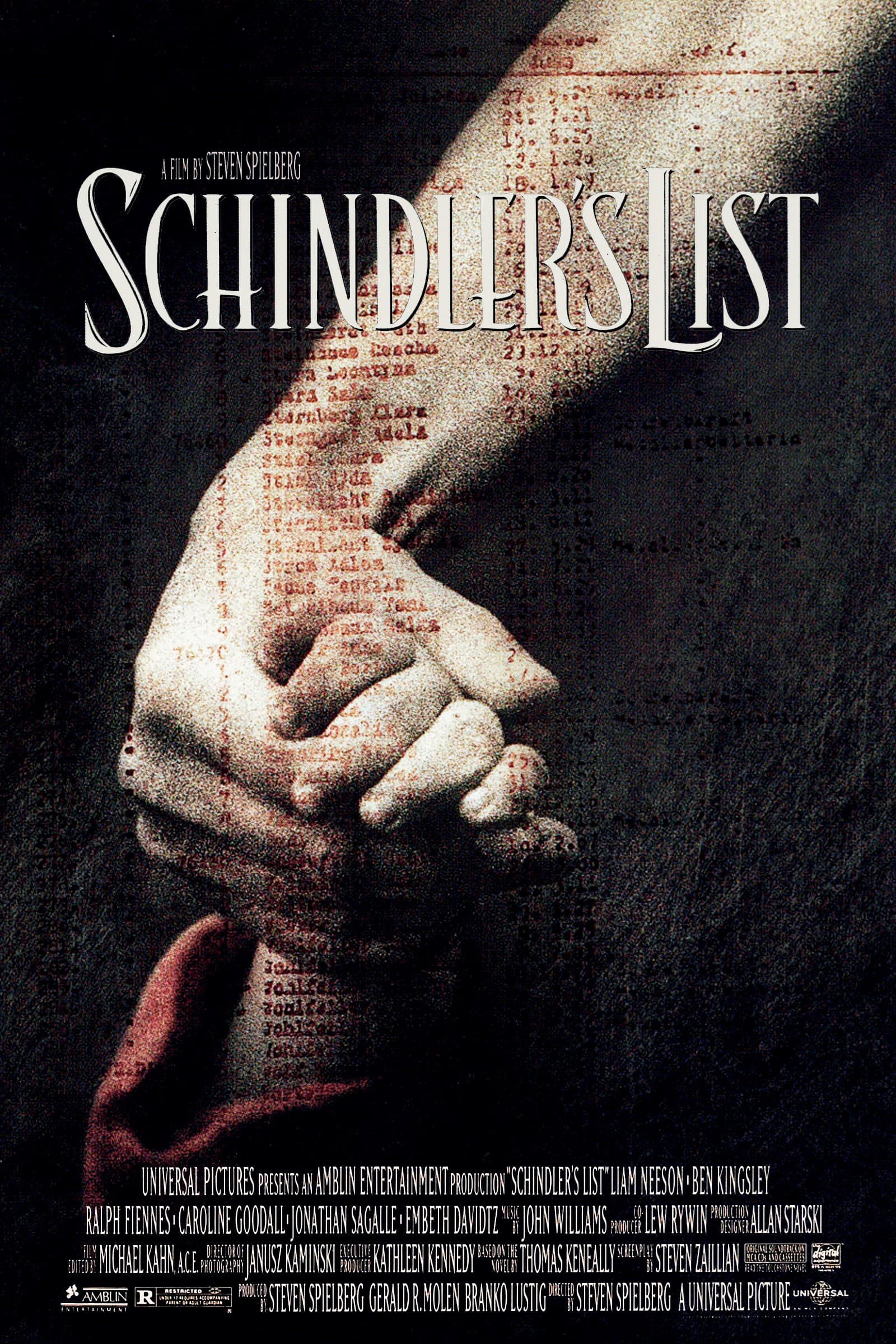
Schindler's List
A businessman who keeps a list — and keeps changing the kind of man he is.
1999 // VHS
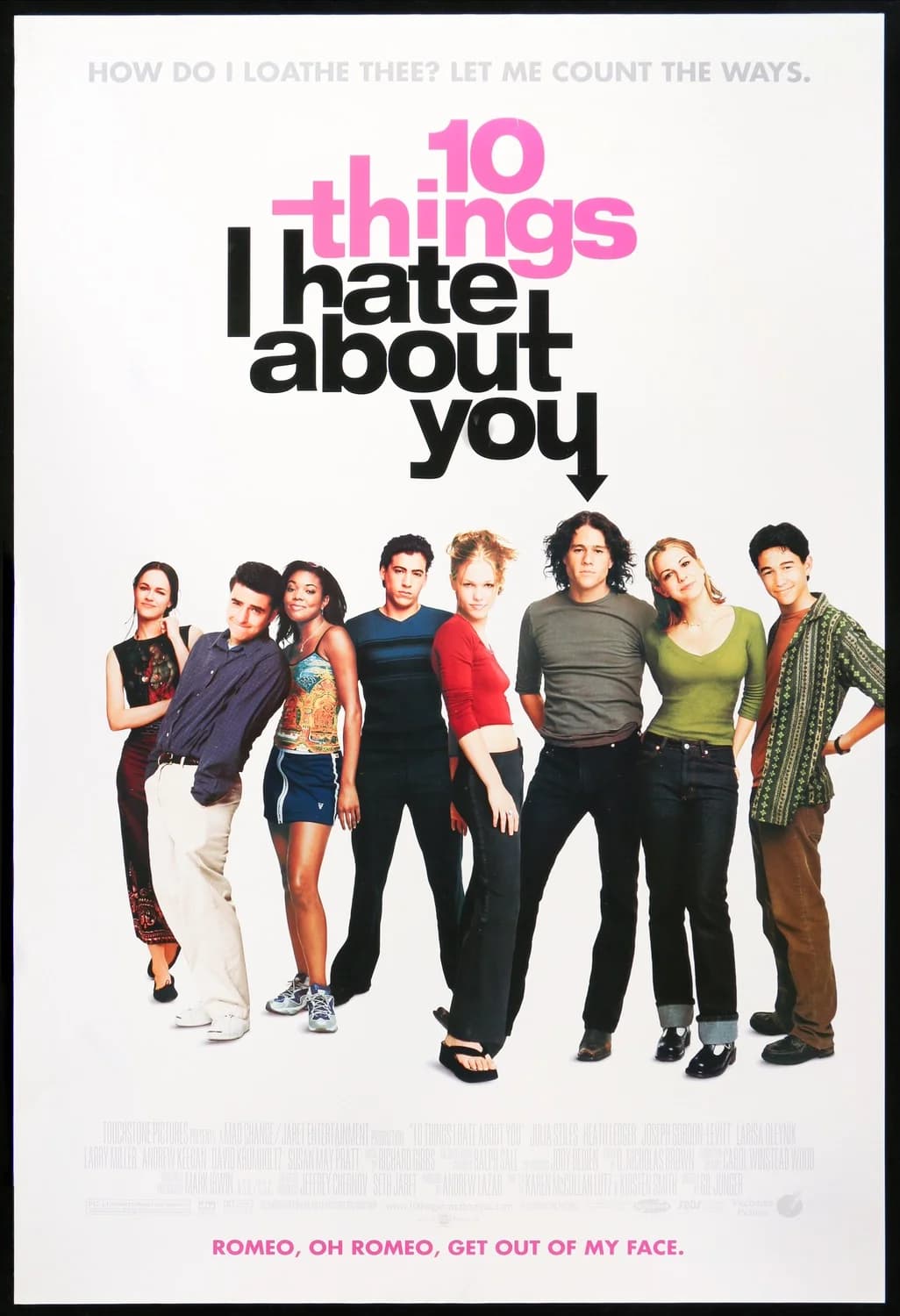
10 Things I Hate About You
Sibling rules, a rooftop serenade and one very stubborn Kat — Shakespeare in a school corridor.
1999 // VHS
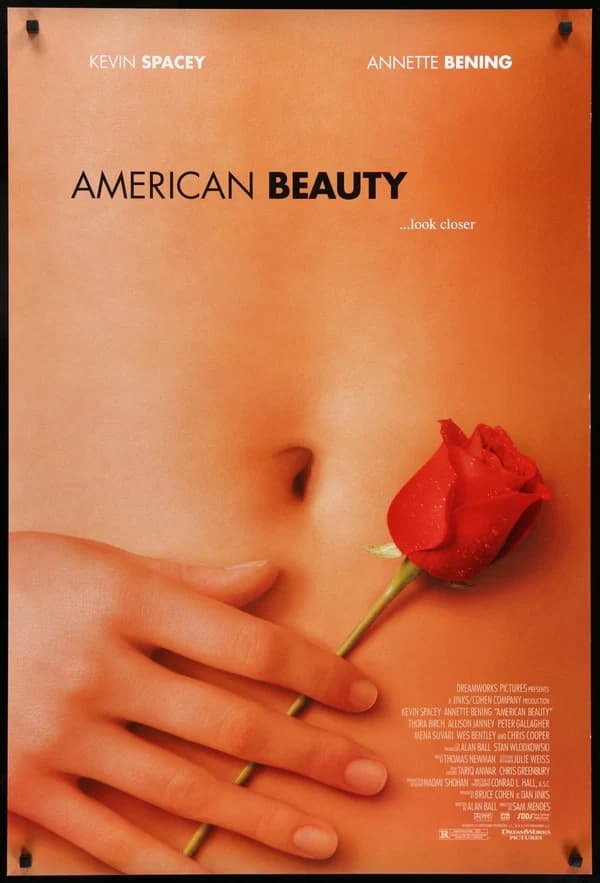
American Beauty
Lester Burnham, suburban rot and a midlife argument that still stings.