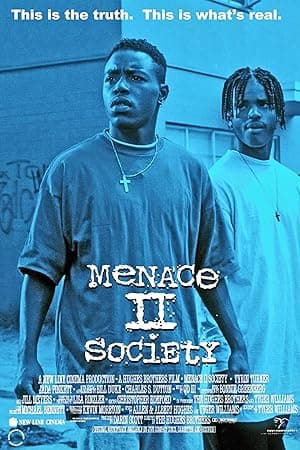
Menace II Society
A coming‑of‑age that never softens its edges: Caine is why Menace II Society still lands.
// The setup
PLAYBACK STARTED
Menace II Society remains a film people bring up when the subject turns to 1990s urban dramas, and for good reason: it gives us Kaydee 'Caine' Lawson — a young man who looks like he might escape, but keeps getting pulled back. Directed by the Hughes brothers, the movie keeps its focus tight, short and sharp, using flashbacks and voice-over to explain how Caine became the person we watch make impossible choices.
THE MOVIE
Kaydee 'Caine' Lawson is still the reason this movie works
If there’s a single thing that keeps Menace II Society in conversation, it’s Kaydee 'Caine' Lawson — a young man raised in Watts who’s got one foot in the street and one foot out, and never quite manages to stand on solid ground. The film watches him weigh loyalty, money and family, and makes those private arguments feel urgent.
The story doesn’t hand you everything at once. It stitches present‑day choices to childhood moments through flashbacks and voice‑over, so you gradually understand why Caine behaves the way he does rather than being told. That structural choice keeps the character specific and the drama immediate.
Albert and Allen Hughes direct with a clarity that serves that narrow focus: a 97‑minute film that insists on following a single life closely, rather than scattering itself across a cast list. Put simply, Caine’s the reason the film still pulls you in.
THE SETUP
The idea that sets Menace II Society in motion
At its most basic, Menace II Society follows Caine as he navigates drug dealing, gang life and the pull of family obligations while wondering if there’s a life beyond the block. That set of pressures is the engine: survival, temptation and the occasional glimpse of alternatives.
The film chooses economy over sprawling exposition. Rather than telling you every step of Caine’s journey, it layers in past episodes — childhood scenes and voice‑over — so the viewer pieces together how family and environment shaped him.
There’s also a bit of production gossip that matters to the film’s texture: the movie’s casting altered in early shoots, which is one reason its final mix of on‑screen personalities feels particular to the Hughes brothers’ vision.
All of that sits inside the screenplay credited to Tyger Williams, grounded by the Hughes brothers’ story contributions — a tight framework for a film that doesn’t waste time explaining itself.
THE CHARACTER
Why Kaydee 'Caine' Lawson matters
Caine matters because the film keeps returning to him — not to turn him into a sermon about the streets, but to show somebody making real, fraught choices. He’s presented as conflicted: tied to the neighbourhood’s economy and expectations, yet showing flashes of scruple and longing for something else.
The movie sets up a moral contrast who’s hard to ignore: O‑Dog, Caine’s volatile friend, pushes a harder, faster version of the same life — his appetite for violence makes Caine’s compromises look less like weakness and more like calculation. That difference helps clarify Caine without turning him into a cardboard counterpoint.
Family history is everywhere in Caine’s story. The absence of stable parental figures and the role of grandparents and elders are used repeatedly to explain how Caine ended up where he is, which keeps his choices feeling earned rather than arbitrary.
And crucially, Tyrin Turner is cast in the role that holds all of this together: Caine is the axis around which the film’s other characters — friends, lovers and relatives — spin.
THE PERFORMANCE
Why Tyrin Turner's performance matters
Contemporary critics singled out the leads — including Tyrin Turner — as central to the film’s punch. That reaction matters because the movie’s economy depends on the audience buying Caine as a real person rather than an archetype.
Turner’s casting anchors the film’s emotional throughline: when Caine hesitates, the film makes you feel the hesitation. When the script nudges him toward a decision, you understand why that choice lands.
The point isn’t star wattage; it’s that the performances were widely noted at the time as a reason the movie hit harder than a simple genre exercise.
UNDER THE SURFACE
Menace II Society has more on its mind than the plot suggests
Under the street-level action, Menace II Society keeps returning to cycles: violence that passes from one generation to the next, and how historical ruptures — notably the Watts unrest — still echo in the neighbourhood’s present. The film treats those echoes as practical facts that shape opportunity and outlook.
It’s also a coming‑of‑age tale that refuses to romanticise growth. Caine’s becoming is messy and partial; he’s not propelling toward clear advancement so much as trying to survive, with the occasional plan to leave that never feels entirely under his control.
Limited social mobility is not an abstract idea here; it’s a pressure you see in choices about jobs, family responsibilities and how people measure risk. Survival, in Menace II Society, is a daily calculation rather than a cinematic obstacle course.
All these elements give the film weight beyond its genre beats: it’s as much a portrait of constrained lives as it is a crime drama.
THE FILMMAKING
How Menace II Society was put together
One practical choice that shaped the film’s feel is the work behind the camera: Lisa Rinzler is credited as director of photography and was recognised for the cinematography. That contribution helps the movie’s immediacy — it looks like it’s insisting you pay attention.
The Hughes brothers’ direction keeps the focus narrow, and the decision to favour specific moments over sprawling set‑pieces gives the film a compact intensity. Teenagers graduate; days pass; consequences unfold — all within a tight 97‑minute frame.
Those production decisions stop the movie from becoming a catalogue of incidents and instead make it feel like the close observation of a single life under pressure.
PURE 80S
Menace II Society could not belong to any other decade
Menace II Society arrived in 1993 during a wave of early‑90s 'hood' films; critics of the time naturally connected it to contemporaries like Boyz n the Hood because they were asking similar questions about young Black men in Los Angeles.
That sense of a shared conversation is amplified by the filmmakers themselves: the Hughes brothers came from a music‑video background tied to the same hip‑hop culture that informs the film’s production choices and soundtrack. The movie feels rooted in those musical and cultural currents, which were particularly prominent in the early ’90s.
So while the film’s concerns — violence, family, leaving the neighbourhood — are not limited to one era, the way it speaks and the cultural materials it borrows make it unmistakably of its time.
WATCHING IT NOW
What has aged — and what hasn't
Certain elements of the film still land. Critics and later writers have praised the movie’s documentary‑style immediacy and Lisa Rinzler’s cinematography — those qualities keep the material feeling immediate rather than museum‑piece sentimental.
At the same time, contemporaneous observers flagged limits in character development, and that criticism hasn’t entirely evaporated. The film’s economy is a strength, but it sometimes means secondary figures don’t get as much room to breathe.
Put another way: the core portrait of Caine and the film’s structural choices still work as a close study of constrained lives, but the narrower focus can leave other people feeling slightly schematic.
That mix — powerful immediacy with occasional thinness around the edges — is exactly why the movie still provokes discussion today.
THE LEGACY
Why Menace II Society still matters
Part of the movie’s lasting profile comes from craft recognition: Lisa Rinzler won the Independent Spirit Award for Best Cinematography for her work here, which helps explain why the film’s visuals continue to be discussed.
The film also found mainstream attention at the time — it won the 1994 MTV Movie Award for Best Movie — and that visibility mattered for the Hughes brothers’ careers, helping them move on to projects like Dead Presidents.
The soundtrack, released the same day as the U.S. opening, tied the film to early‑1990s hip‑hop in a way that reinforced its period identity and broadened its reach beyond strictly cinematic circles.
Those concrete achievements — awards, career momentum and a marketable soundtrack — are good reasons the movie hasn’t simply slipped away.
THE VERDICT
Does Menace II Society still hold up?
Yes — with caveats. Menace II Society remains a compact, often unforgiving look at one young life boxed in by history, family and the economics of the street. It follows a concentrated period in Caine’s life, shows formative childhood episodes and repeatedly reminds you that violence and its legacies travel through generations.
The movie’s strength is its focus: by sticking close to Caine and letting flashbacks and voice‑over supply context, it makes his compromises intelligible. O‑Dog’s volatility functions as a moral foil that sharpens Caine’s choices rather than flattening them.
Where the film sometimes feels dated is in what it doesn’t do: a narrow attention means some secondary figures aren’t explored as fully as they might be. That’s a reasonable trade for intensity, but it’s worth knowing before you watch.
Bottom line — it’s worth seeing today if you want a lean, unblinking early‑90s hood drama centred on a single, complicated character. Menace II Society still speaks plainly about survival, limited mobility and the ways the past shapes the present — and Caine is the reason it does.
Share this movie
// Keep watching
More movies from the 90s
If Menace II Society is your kind of movie, there's plenty more on the shelves worth rewinding.
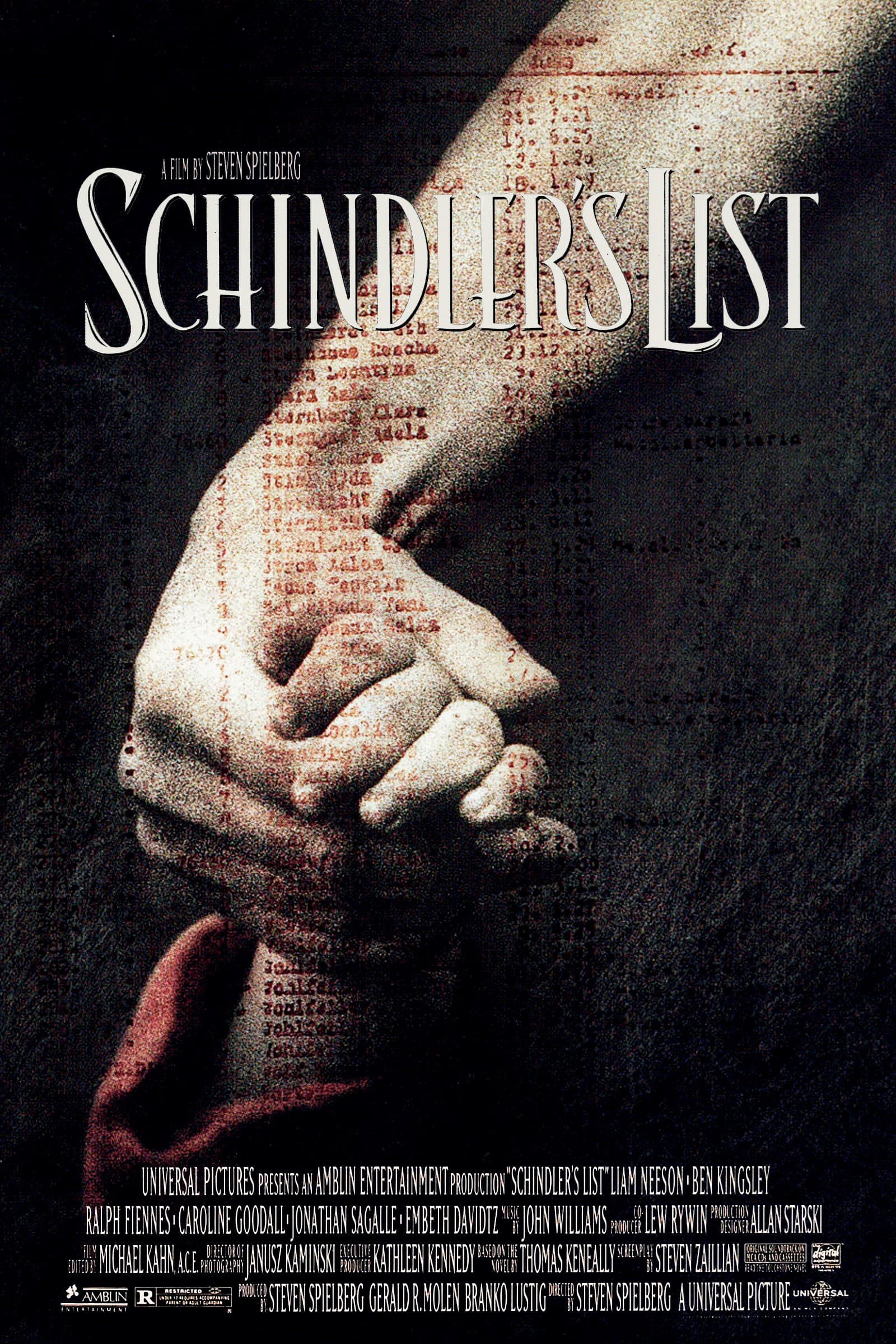
1993 // VHS
Schindler's List
A businessman who keeps a list — and keeps changing the kind of man he is.
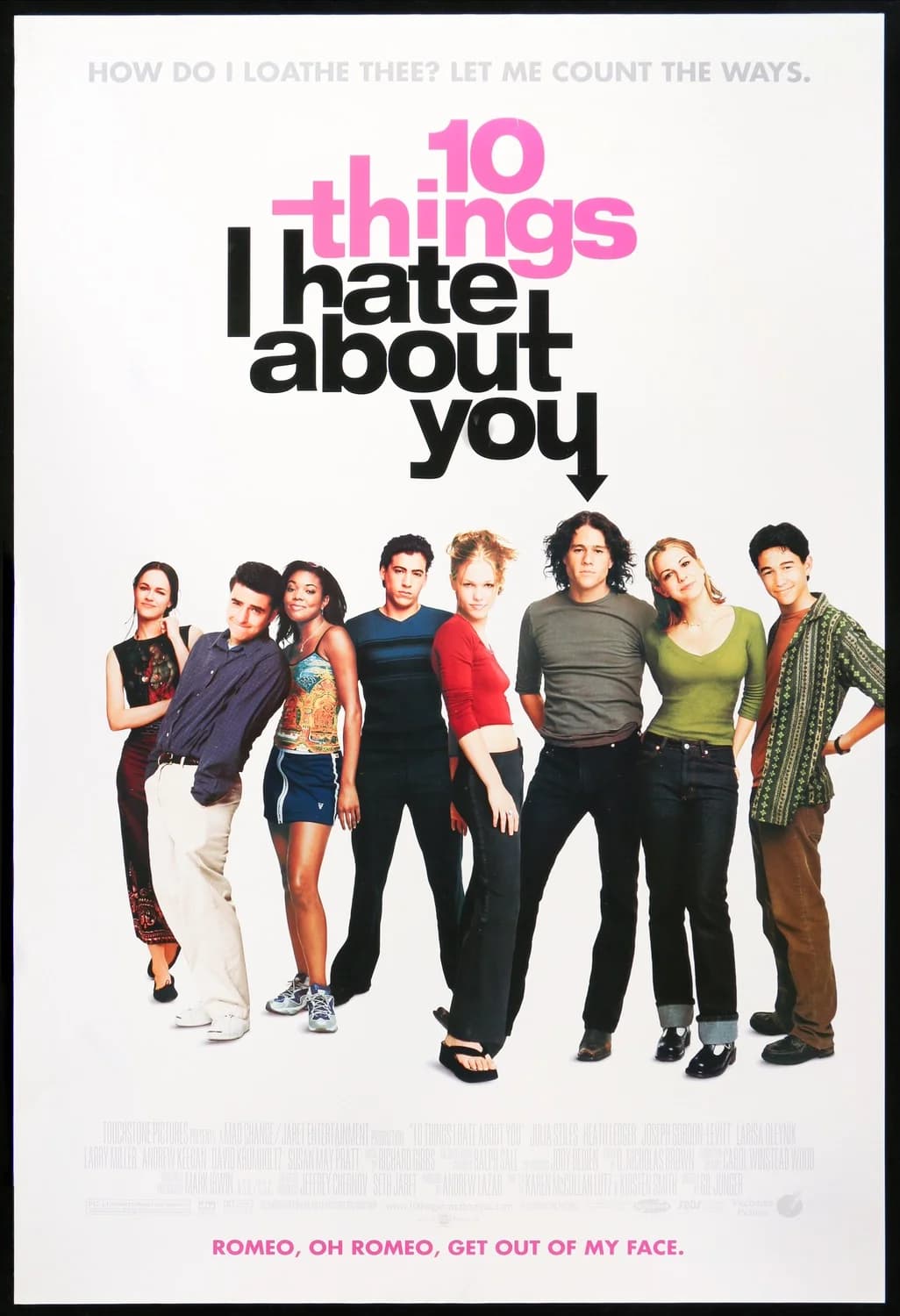
1999 // VHS
10 Things I Hate About You
Sibling rules, a rooftop serenade and one very stubborn Kat — Shakespeare in a school corridor.
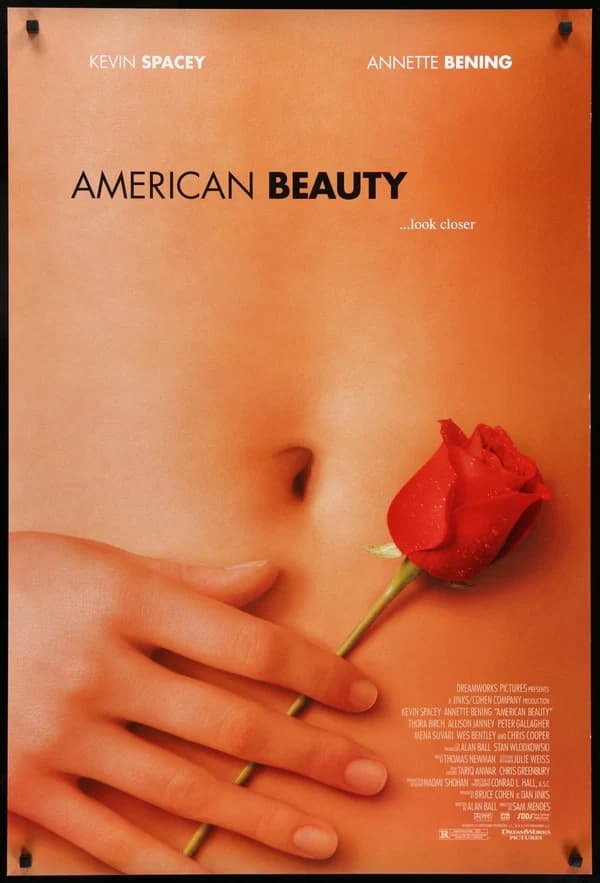
1999 // VHS
American Beauty
Lester Burnham, suburban rot and a midlife argument that still stings.