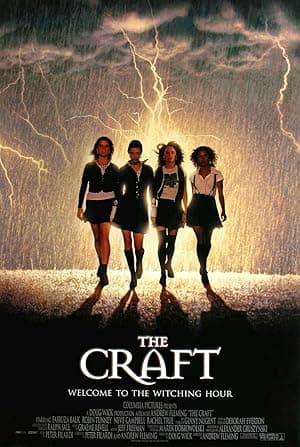
The Craft
Outsiders, spells and the price of getting what you want.
// The setup
PLAYBACK STARTED
Talk about a late-90s rite of passage: The Craft plugs a new girl into a tight, spooky clique and watches the tension do the rest. Andrew Fleming’s teen-horror hybrid turns familiar high-school troubles into a testing ground for power, responsibility and what happens when friendship curdles into vindictiveness. If you remember the film at all, you probably remember Sarah Bailey — because everything in the story hinges on her.
THE MOVIE
Sarah Bailey is still the reason this movie works
The Craft begins with a straightforward switch: a new girl, Sarah Bailey, arrives at a Los Angeles parochial school and ends up joining three outcast students who practise witchcraft. That setup sounds like a simple teen-fantasy hook — but Sarah’s presence is less about spectacle and more about balance. Her arrival completes the coven’s circle and awkwardly places her as the moral pivot around which everything else turns.
What follows is a neat escalation trick. Early on the coven’s spells deliver exactly what the girls want — small, satisfying reversals of the kinds of cruelties teenagers regularly endure. Then the group dynamic shifts. One member becomes increasingly reckless and vindictive, and the movie watches the consequences unfold.
All of this is delivered in a compact package: Andrew Fleming directed the film, it runs for about 100 minutes, and it stars Robin Tunney alongside Fairuza Balk, Neve Campbell and Rachel True as the four girls whose friendship spins out of control. That’s the spine: outsider identity, the seductive pull of power, and what happens to loyalty when revenge looks like a solution.
THE SETUP
The idea that sets The Craft in motion
The Craft doesn’t waste time on elaborate mythology. The engine is simple: a coven of girls uses ritualised spells — invocations, glamour, binding — to tip their real-life problems back in their favour. Those rituals are the narrative tool that turns ordinary teen grievances into dramatic, and sometimes dangerous, outcomes.
Because the spells actually work, the early scenes feel like wish-fulfilment: petty bullies get a comeuppance, personal insecurities shift, and the girls taste the effectiveness of their own action. That success is what sells the coven as something more than a teenage pastime; it becomes a means of agency.
Which makes the mid-film reversal inevitable. Power, once tasted, invites larger risks, and group dynamics amplify that temptation. One member’s increasing vindictiveness changes the coven from a place of shared solace into a fractured, dangerous alliance.
Beneath the surface, the screenplay’s shape — originally from Peter Filardi and then revised by Andrew Fleming — uses the supernatural as shorthand for very human concerns. The magic lets the story dramatise bullying, body-image trauma and racist harassment in sharper, occasionally brutal strokes, without turning the film into a literal allegory.
THE CHARACTER
Why Sarah Bailey matters
Sarah Bailey isn’t the loudest or the most striking member of the coven. She’s the anxious outsider, a teenager grieving her mother, who walks into an already-formed group and, by virtue of being the fourth, completes the circle. That completion is a tidy story device — but it also gives the film a character to worry about rather than simply marvel at.
Positioning Sarah as the moral fulcrum gives the movie an internal check. When things go wrong, the audience has someone to measure the excess against: someone who questions the price of revenge and who, crucially, offers a route back from escalation.
It’s also why the chemistry of the group matters so much. Robin Tunney’s Sarah is one quarter of a quartet that includes Fairuza Balk, Neve Campbell and Rachel True, and the film deliberately constructs the four of them as a set of distinct responses to being outsiders. Sarah’s role is the necessary counterpoint to those extremes.
In short: the plot could have existed without Sarah, but it would have been a different film. With her in place, The Craft becomes less a revenge fantasy and more a story about what happens when ordinary adolescent hurt meets real power.
THE PERFORMANCE
Why Robin Tunney's performance matters
Contemporary reviews singled out individual performances in the film’s early sections, and Robin Tunney was one of the actors critics noticed. That attention matters here because Sarah’s role is to register doubt, fear and the slow hardening that power can provoke.
The film depends on someone who can plausibly be pulled into a coven without ever feeling like a cipher. The period when the movie still seems anchored — before things tip into revenge-driven excess — rests in part on those early reactions that reviewers highlighted.
So the point isn’t awards or biographies. It’s straightforward: the character needs a believable interior life during the film’s quieter stretches, and contemporary observers identified Tunney as delivering that presence at the film’s start.
That presence helps the story’s moral tension land: is this group a healing friendship, or a dangerous shortcut? The performances noted by critics give the question weight.
UNDER THE SURFACE
The Craft has more on its mind than the plot suggests
On the surface The Craft is a teen horror with spells and set pieces. Underneath, it’s primarily about adolescent outsider identity and the messy work of belonging. The girls who gather are all outcasts for different reasons, and the coven functions as both shelter and mirror.
Because the story gives these outsiders real power, the film asks an ethical question: what do you do when you can change other people’s lives with a gesture? Power and responsibility is more than a theme here; it’s the test the characters must fail or pass.
Female friendship and betrayal threads run through the plot like fault lines. The coven begins as solidarity against common hurts — bullying, body-image issues, racist harassment — but solidarity withholds no guarantees. The moment one member chooses revenge over restraint, the group’s loyalty collapses into conflict.
That’s where trauma and revenge come in. The film does not pretend cruelty can be simply reversed; it treats retaliation as an intoxicant that produces consequences bigger than the initial injury. Those layered tensions are what keep The Craft from being only a Halloween diversion.
THE FILMMAKING
How The Craft was put together
A few practical production choices help the film feel lived-in. Alexander Gruszynski is credited as director of photography and Jeff Freeman as editor, while production designer Marek Dobrowolski altered locations — adding elements like religious statuary to the school — to build the film’s particular environment.
Those modifications are quiet but effective: they give the ordinary high-school setting a slightly heightened, ritual-ready quality without turning it into a stage set. The result supports the central conceit that magic can seep into ordinary life.
Andrew Fleming’s role as co-writer and director means the movie wears its narrative decisions plainly: it's more interested in character and consequence than in inventing new occult rules. The filmmaking choices reflect that focus.
Taken together, the crew’s work creates a recognisable world where teenage grievances can plausibly feel like crises — and where the supernatural escalation doesn’t land as tonally alien to the film’s earlier scenes.
PRACTICAL EFFECTS
The effects work that gives The Craft its physical personality
The Craft mixes location work with hands-on practical effects. Makeup and special makeup effects were designed by Tony Gardner and his company Alterian, Inc., who also created the film’s beached-shark sequence.
Those practical touches are paired with a production approach that used on-location exteriors and built interiors — Sarah’s house, for example — alongside stunts and makeup to stage the supernatural moments. The combination keeps the film’s weirdness tactile and immediate.
It’s useful to remember that these are physical techniques serving a story about psychological changes; the effects rarely call attention to themselves for their own sake. Instead they underline when the coven’s experiments move from unsettling to dangerous.
So while The Craft has its share of genre moments, much of the film’s physical personality comes from this straightforward marriage of locations, sets and practical makeup work.
PURE 80S
The Craft could not belong to any other decade
The Craft premiered on 3 May 1996, smack in the middle of a mid-90s wave of teen-oriented horror and supernatural films that paired youth-culture sensibilities with genre conventions. It felt of its moment because it spoke directly to the teenage anxieties that dominated that wave.
Costume, music and visual choices in the film leaned into the alternative/goth-adjacent youth fashion and soundtrack curation of the decade, which helped it resonate with teens at the time. That aesthetic gave the film an identity beyond plot.
Contemporary reviews were mixed, but that precise blend of teen drama and genre — and the way it captured a recognisable teen subculture — helped the film find a devoted audience among 1990s youth and, later, among newer viewers discovering it on home video.
Put simply: The Craft wears its decade on its sleeve in ways that are material to how audiences connected with it then and how nostalgia has treated it since.
WATCHING IT NOW
What has aged — and what hasn't
There’s a part of The Craft that continues to play precisely because it captures a particular 1990s teen sensibility: tone, gothic-tinged fashion and soundtrack choices are part of its continuing appeal. Retrospective coverage often points to that as a reason new viewers seek it out.
The core dramatic engine — mixing teen-drama issues like bullying, body-image trauma and racist harassment with supernatural escalation — still functions. Those real-world beats remain recognisable and, when the film is at its best, give the eerie elements something to bounce off.
However, nostalgia shouldn’t be a get-out-of-criticism card. The Craft’s strength is not that it’s timeless; it’s that certain narrative choices — especially the focus on female friendship and betrayal — remain sharp enough to provoke conversation today.
The afterlife of the original, including a 2020 follow-up and recent archival home-video releases, underlines the film’s continuing visibility. Whether that visibility equals universal approval is another question; what survives is a movie that still sparks debate about power, revenge and who gets to belong.
THE LEGACY
Why The Craft still matters
The Craft developed a cult following after its release, and that recurring cultural visibility is part of why the original received a follow-up in 2020. The continued interest speaks to a movie that lodged itself in a particular corner of youth culture.
There’s also the small, nitty-gritty evidence of the film’s ongoing presence: Robin Tunney and Fairuza Balk won a 1997 MTV Movie Award for Best Fight for one sequence, and Balk received a Saturn Award nomination. Those are reminders that the film’s performances and moments stuck with audiences and genre observers at the time.
More recently, the movie received archival attention with a 4K UHD release tied to its anniversary, a sign that collectors and long-term fans care enough to preserve and revisit it.
All of which is to say: The Craft matters less as a unanimously loved classic and more as a film that continued to generate attention, discussion and a market for preservation long after its theatrical run.
THE VERDICT
Does The Craft still hold up?
Yes — with a caution. If you’re watching for teenage mood, tangled friendship and a neat moral experiment about power, The Craft still delivers. The premise is tidy: a new girl, Sarah Bailey, joins an existing coven and by completing the four-person circle the group gains access to more consequential magic. That structural idea keeps the story compact and focused.
The film’s mixture of teen-drama beats — bullying, body-image trauma and racist harassment — with escalating supernatural consequences still makes for an engaging, occasionally uncomfortable watch. And contemporary reviewers noticed the performances in the film’s early sections, which helps the quieter moments land.
But it isn’t flawless. The movie is very much of its moment, and part of its charm for modern viewers is precisely that 1990s sensibility. If you want a witchcraft movie that reads as wholly modern, this isn’t it. If you want a sharp, compact exploration of adolescent outsiders, power and betrayal wrapped in genre trimmings, it’s worth your time.
In short: watch it for Sarah Bailey’s role as the group’s hinge and for the way the film stages the moral cost of getting what you want. The Craft holds up enough to still feel provocative — and not just because it’s a nostalgic artefact, but because its central questions about friendship and power still land.
// Featured in
More about The Craft
Share this movie
// Keep watching
More movies from the 90s
If The Craft is your kind of movie, there's plenty more on the shelves worth rewinding.
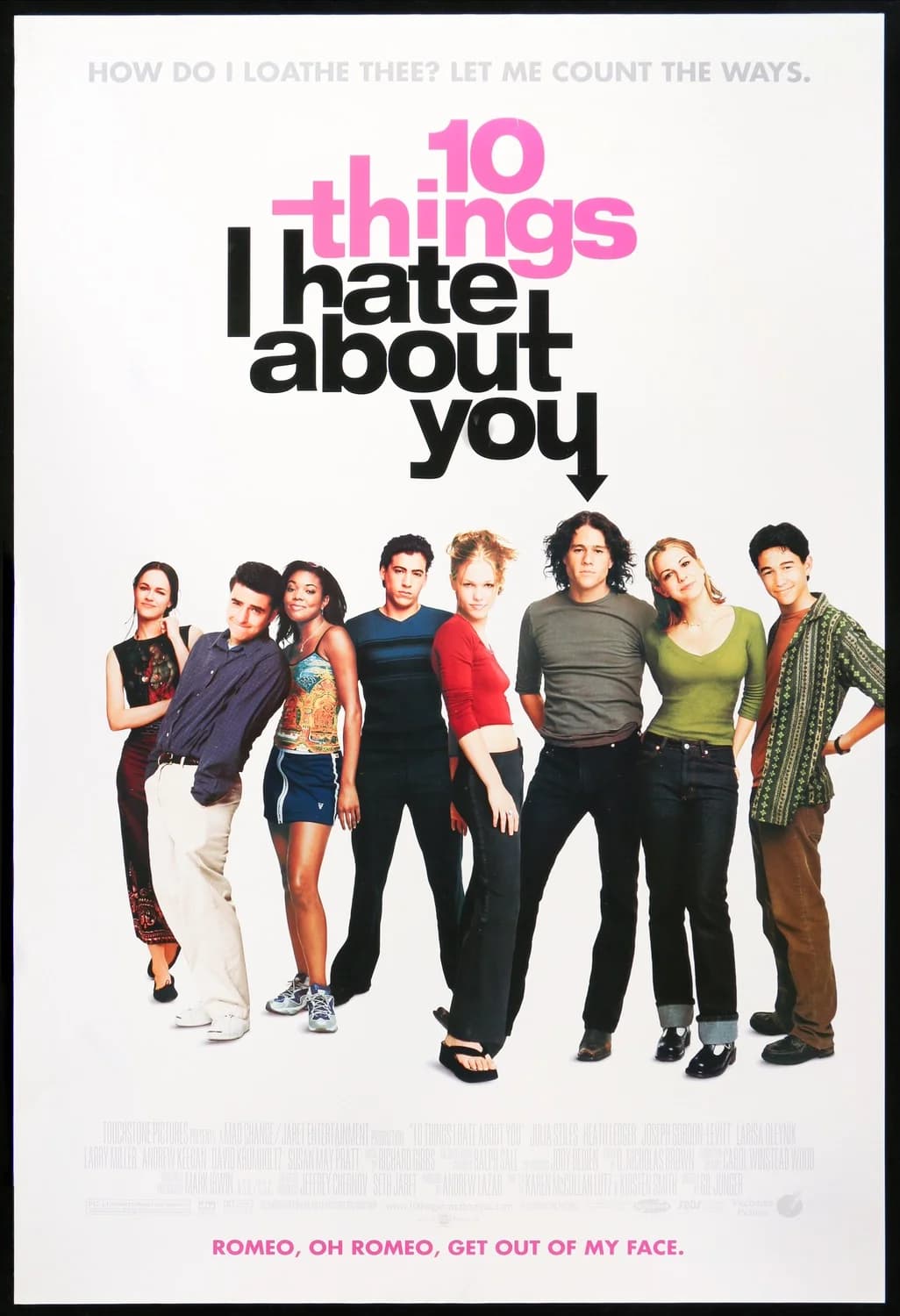
1999 // VHS
10 Things I Hate About You
Sibling rules, a rooftop serenade and one very stubborn Kat — Shakespeare in a school corridor.
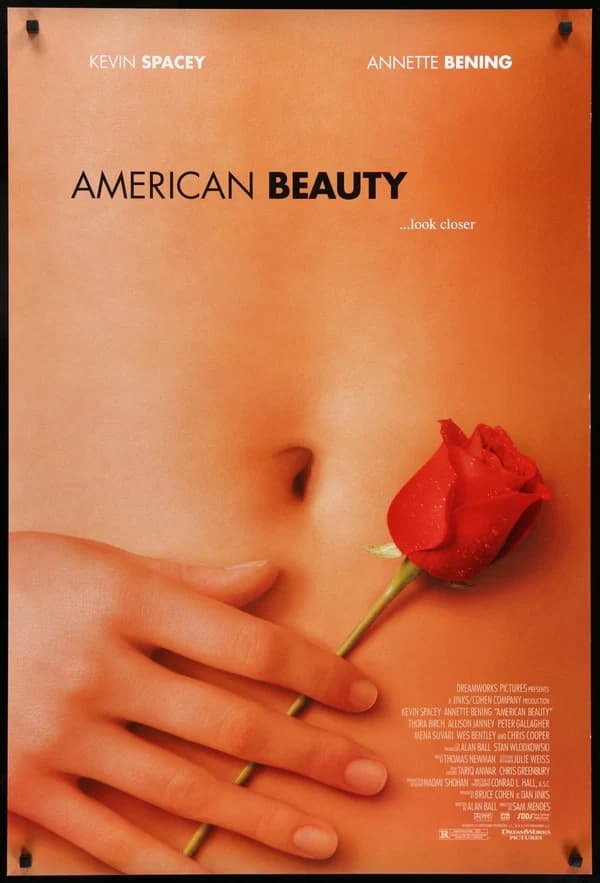
1999 // VHS
American Beauty
Lester Burnham, suburban rot and a midlife argument that still stings.
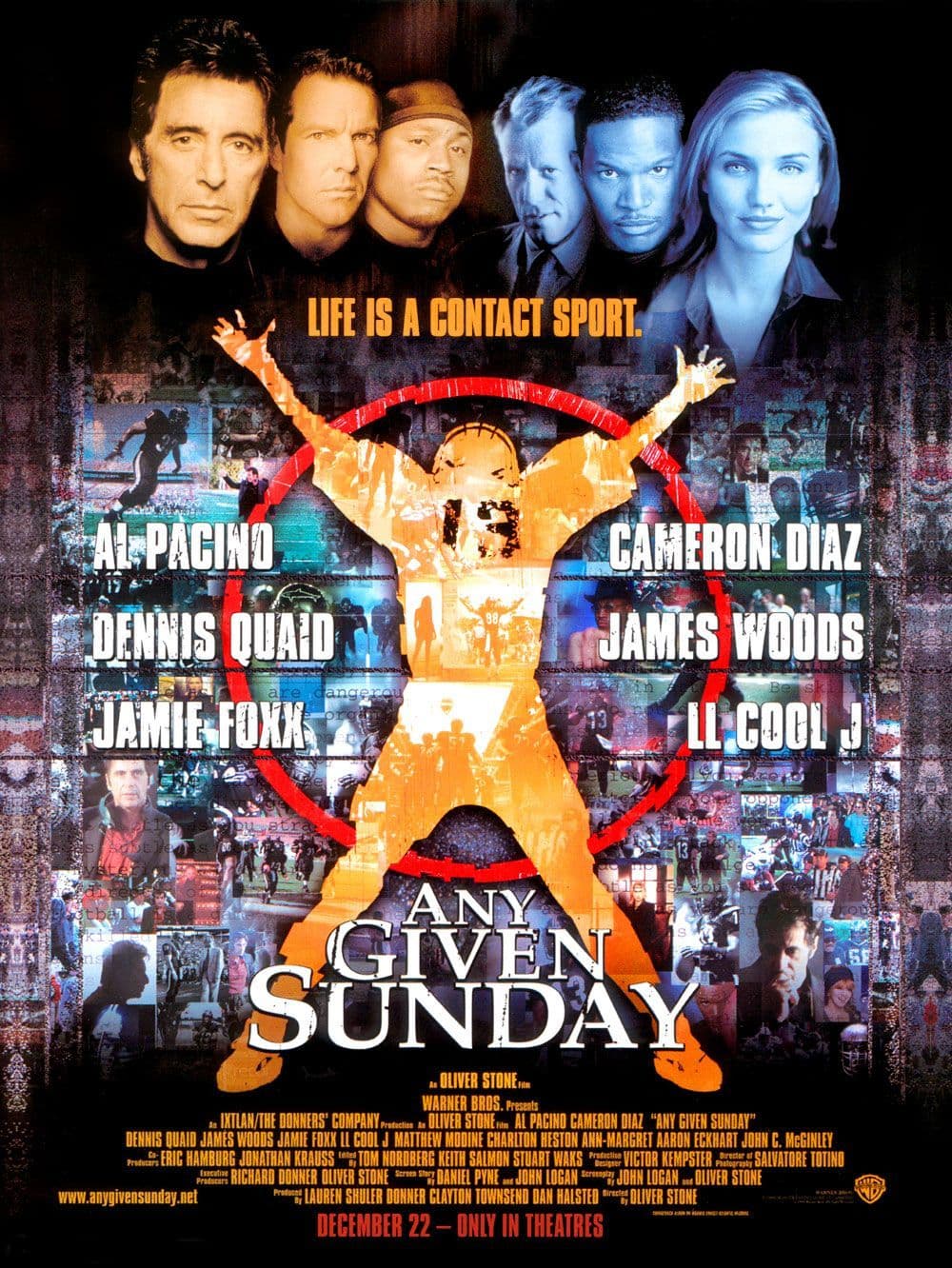
1999 // VHS
Any Given Sunday
Al Pacino's coach anchors the chaos of a film about football turned into product — loud, messy and oddly persuasive.