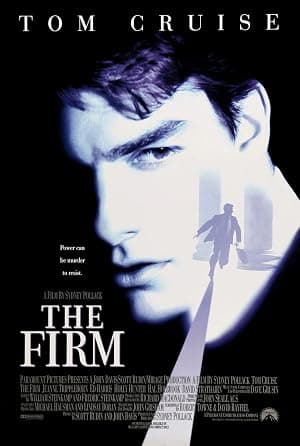
The Firm
A young lawyer, a gilded office and the slow price of getting ahead.
// The setup
PLAYBACK STARTED
The Firm still hooks you because its centre is not a mystery to be solved but a man making small compromises until they add up. Under Sydney Pollack’s steady hand, Tom Cruise’s Mitch McDeere is less a hero and more a test case: how much prosperity do you trade for peace of mind? Rewatch it for the moral negotiating, not the courtroom fireworks.
THE MOVIE
Mitch McDeere is still the reason this movie works
What keeps The Firm interesting—decades on—isn’t just its plot of crooked ledgers and offshore accounts. It’s the fact that the film spends so much time with Mitch McDeere as he walks into temptation rather than shouts from the rooftops. He’s offered an irresistible life: huge pay, perks and the trappings of quick social ascent. That’s where the drama lives.
Tom Cruise plays the recent Harvard Law graduate who signs up with a small Memphis firm and slowly notices things that don’t add up. Those early scenes—recruitment, relocation, the first glossy benefits—are the inciting moments that put everything in motion and explain why Mitch’s choices matter.
Sydney Pollack directs a long, patient thriller here. It runs at roughly two and a half hours and trusts its ensemble to carry the load: Mitch, his worried wife Abby, the firm’s senior partners and the men who press him from the outside. Between moral compromise and institutional rot, the movie finds its character drama.
THE SETUP
The idea that sets The Firm in motion
At heart, The Firm asks a reasonably simple question: does Mitch protect his new prosperity or tear the house down to expose the crime inside it? It’s a practical dilemma with obvious stakes—money, safety, the future of his marriage—but the film keeps returning to the anxious arithmetic of that choice.
The mechanics that drive his decision are concrete. Mitch finds oddities in billing records, discovers a pattern of offshore dealings tied to Cayman Islands addresses and notices that several associates have met suspicious ends. Those discoveries pull in outside forces: an insistent FBI agent and a private investigator, both eager for evidence.
Complications arrive in mundane forms too: surveillance by the firm’s security apparatus and the quiet pressure of having everything you’ve ever wanted placed on the line. A firm secretary with intimate knowledge of the practice and a private investigator become crucial to how Mitch navigates the maze of proof and peril.
It’s not a blow‑by‑blow thriller so much as a cat-and-mouse played out through documents, threats and moral calculation. That restrained setup is why the central conflict feels inevitable rather than contrived.
THE CHARACTER
Why Mitch McDeere matters
Mitch matters because he’s not a mystery or a superhero; he’s a wiring diagram of ambition. He wants to escape the limitations of his background and give his wife a better life, and that hunger is what makes the firm’s offers so intoxicating.
That personal history does two useful things for the movie. First, it explains why Mitch doesn’t immediately run for the hills when he smells trouble. Second, it makes his ethical decisions feel private and persuasive rather than purely heroic or villainous.
The film also smartly keeps Abby in the frame. She grows uneasy with how the firm intrudes and eventually becomes an active participant in the efforts to gather evidence. Their relationship supplies the domestic counterweight to the white‑collar pressure around them.
And there are the smaller characters who tilt the scales: a secretary who knows the firm’s inner workings and whose choices open up options Mitch wouldn’t have by himself. Those alliances make Mitch less of a lone whistleblower and more of someone learning how to navigate danger with other people.
THE PERFORMANCE
Why Gene Hackman's performance matters
Avery Tolar is the senior partner who represents the firm’s gravity more than its villainy, and Gene Hackman’s work in those scenes drew particular praise on release. Contemporary reviewers singled out Hackman when pointing to the ensemble’s strengths.
What that praise signals is tactical: Tolar isn’t a cartoonish antagonist. He’s a figure whose loyalty to the firm complicates Mitch’s moral calculations, and Hackman’s scenes give that complication weight.
In practice, those moments make the power structures of the firm feel lived-in rather than schematic. They’re small but important beats that keep the drama from flattening into a mere thriller checklist.
UNDER THE SURFACE
The Firm has more on its mind than the plot suggests
Strip away the ledger-crunching and you find a movie preoccupied with moral compromise: how tidy careers and sudden wealth quietly ask for concessions. Mitch’s ambitions make him vulnerable; the film makes that vulnerability the engine of drama.
Closely tied to that is institutional corruption. The firm’s legal privileges and internal protections are shown as shields that can be misused, which pushes the narrative into questions about where law ends and cover-up begins.
There’s also an unspoken regional note—this is a story about a New South where prosperity has a gloss and secrets hide underneath. That setting matters because it frames the firm’s success as part of a larger social transformation where class and opportunity are being renegotiated.
And finally: legal ethics. The movie repeatedly places the rules of the profession against personal survival, so the courtroom tropes are less the point than the ethical tightrope Mitch is asked to walk.
THE FILMMAKING
How The Firm was put together
Sydney Pollack directs with a veteran’s discipline: the film has a deliberate pace and an old‑school economy that lets performances and plot mechanics carry the material. The crew credits back that approach with John Seale listed as cinematographer and Fredric and William Steinkamp as editors.
Those names point to a production that favoured craftsmanship over gimmick. Pollack and his team build the movie out of scenes and conversations rather than set-piece pyrotechnics, which suits a story about legal detail and creeping pressure.
A practical production note: Gene Hackman’s casting on Avery Tolar happened late in the schedule after the producers briefly considered altering the role’s gender. That kind of late change matters because it shifted the film’s centre of authority in ways the final cut leans on.
All told, the filmmaking choices create a steady, credible atmosphere for a legal thriller that prefers sustained tension to flashy flourishes.
PURE 80S
The Firm could not belong to any other decade
The Firm arrives at a moment when John Grisham adaptations were an industry unto themselves. Released in 1993, it rode the wave of early‑1990s legal thrillers that made courtroom procedural plots a studio staple.
Its concerns—money laundering, offshore accounts and white‑collar crime—fit the era’s appetite for tales where the respectable can be corrupt. Audiences then were curious about the mechanics of corporate wrongdoing, and the movie lays those mechanics bare.
What that decade connection gives The Firm is a specific narrative preoccupation: it treats legal detail as a plot engine in the same way other 1990s pictures treated forensic or investigative craft. It’s very much of its moment, and it benefits from that focus.
Seen this way, The Firm is a period piece of ideas rather than look—an early‑90s take on how private wealth and public law can collide.
THE LEGACY
Why The Firm still matters
The Firm left a clear footprint because it succeeded where studios hoped it would: it reached a large audience and remains the highest‑grossing film adapted from a Grisham novel. That commercial success mattered; it encouraged more studio attention to legal thrillers afterwards.
It also found recognition in awards season: Holly Hunter received an Academy Award nomination for Best Supporting Actress and Dave Grusin was nominated for Best Original Score. Those nominations underlined that the movie wasn’t just a crowd‑pleaser but had craft that peers noticed.
There’s a smaller, stranger legacy too: the movie’s popularity gave a boost to local interest in its Memphis locations, and the story’s afterlife included a later television sequel series that continued the characters’ narrative.
Taken together, those outcomes explain why The Firm stays in the conversation: it proved commercially viable, it collected a couple of serious nominations and it kept enough narrative momentum to be revisited on television years later.
THE VERDICT
Does The Firm still hold up?
Yes—if you come for its anatomy of compromise. The Firm’s central engine is always Mitch’s decision-making: he takes a tempting job, enjoys the rewards, then must weigh exposing the firm against protecting his new life. That moral arithmetic gives the film a steady reason to exist.
It’s fair to flag the film’s length and occasional lapses in narrative clarity—contemporary responses noticed those same things—but those faults don’t erase the movie’s strengths. The procedural elements (suspicious billing records, FBI pressure, Cayman Islands ties and covert surveillance) are credible plot material, and the presence of allies—a secretary with inside knowledge and a private investigator—keeps the stakes pragmatic.
Performance-wise, the cast and the characters they play—the mentor figure at the firm, the FBI contact applying pressure, and Abby as partner in these difficult choices—make the moral dilemmas feel personal rather than schematic. Sydney Pollack’s direction ties those pieces together across a long running time that asks for patience.
So should you watch it now? If you want a legal thriller that treats compromise as a slow burn and cares more about decisions than spectacle, The Firm still rewards attention. It’s less a fast‑paced popcorn thriller and more a careful case study in what people surrender when they climb.
Share this movie
// Keep watching
More movies from the 90s
If The Firm is your kind of movie, there's plenty more on the shelves worth rewinding.
1993 // VHS
Schindler's List
A businessman who keeps a list — and keeps changing the kind of man he is.
1999 // VHS
10 Things I Hate About You
Sibling rules, a rooftop serenade and one very stubborn Kat — Shakespeare in a school corridor.

1999 // VHS
American Beauty
Lester Burnham, suburban rot and a midlife argument that still stings.