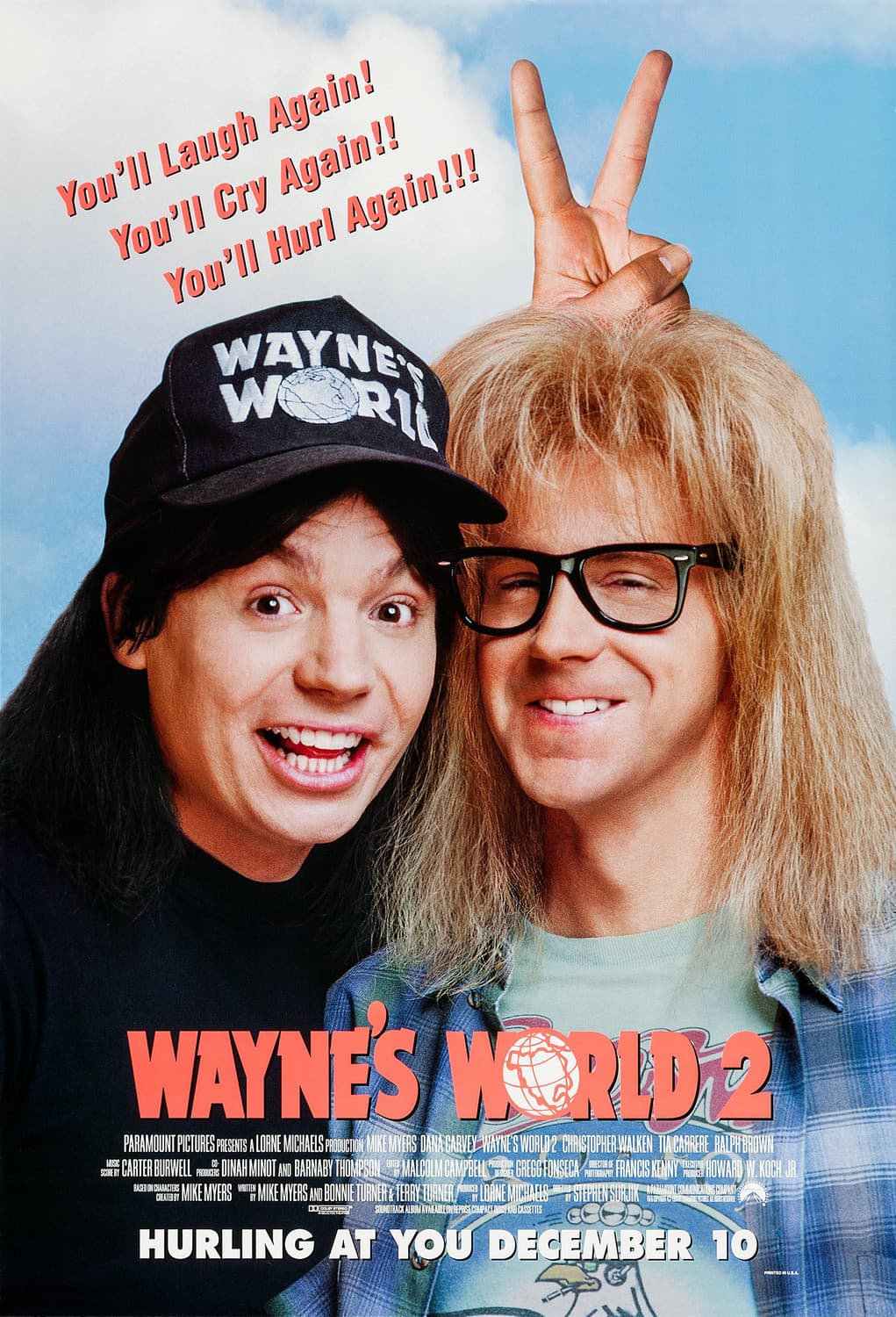
Wayne's World 2
Wayne and Garth try to grow up — but they'd rather stage a rock festival.
// The setup
PLAYBACK STARTED
Wayne's World 2 is the rare sequel that still feels like a catch-up with mates rather than a desperate attempt to top the original. Under Stephen Surjik’s direction, Wayne Campbell gets a Jim Morrison‑fuelled nudge and decides to go big: Waynestock, complete with backstage chaos, celebrity cameos and tests to a friendship that’s never really been about showbusiness glamour.
THE MOVIE
Wayne Campbell is still the reason this movie works
Forget bombastic sequel justifications. The immediate, unmistakable hook of Wayne's World 2 is simple: Wayne and Garth have actually moved the show out of Wayne’s parents’ basement and are trying, clumsily and loyally, to do something bigger with their lives.
The film gives Wayne a comic but consequential mission — he dreams about a Jim Morrison figure who tells him to stage a major rock festival, and the pair set about organising 'Waynestock.' That dream isn’t window dressing; it’s the engine that turns Wayne’s chatter into urgent stakes.
At its centre is a recognisable worry: Wayne wants to prove he can do something meaningful while keeping hold of his relationship with Cassandra and the public‑access identity that made him who he is. It’s ridiculous and earnest in equal measure, and it’s why, even now, a lot of people still come back to it.
THE SETUP
The idea that sets Wayne's World 2 in motion
The film’s premise is almost annoyingly straightforward: Wayne and Garth have upgraded from basement production to a slightly more ambitious life, and then Wayne is visited in a dream that tells him to put on a rock festival. Thus: Waynestock.
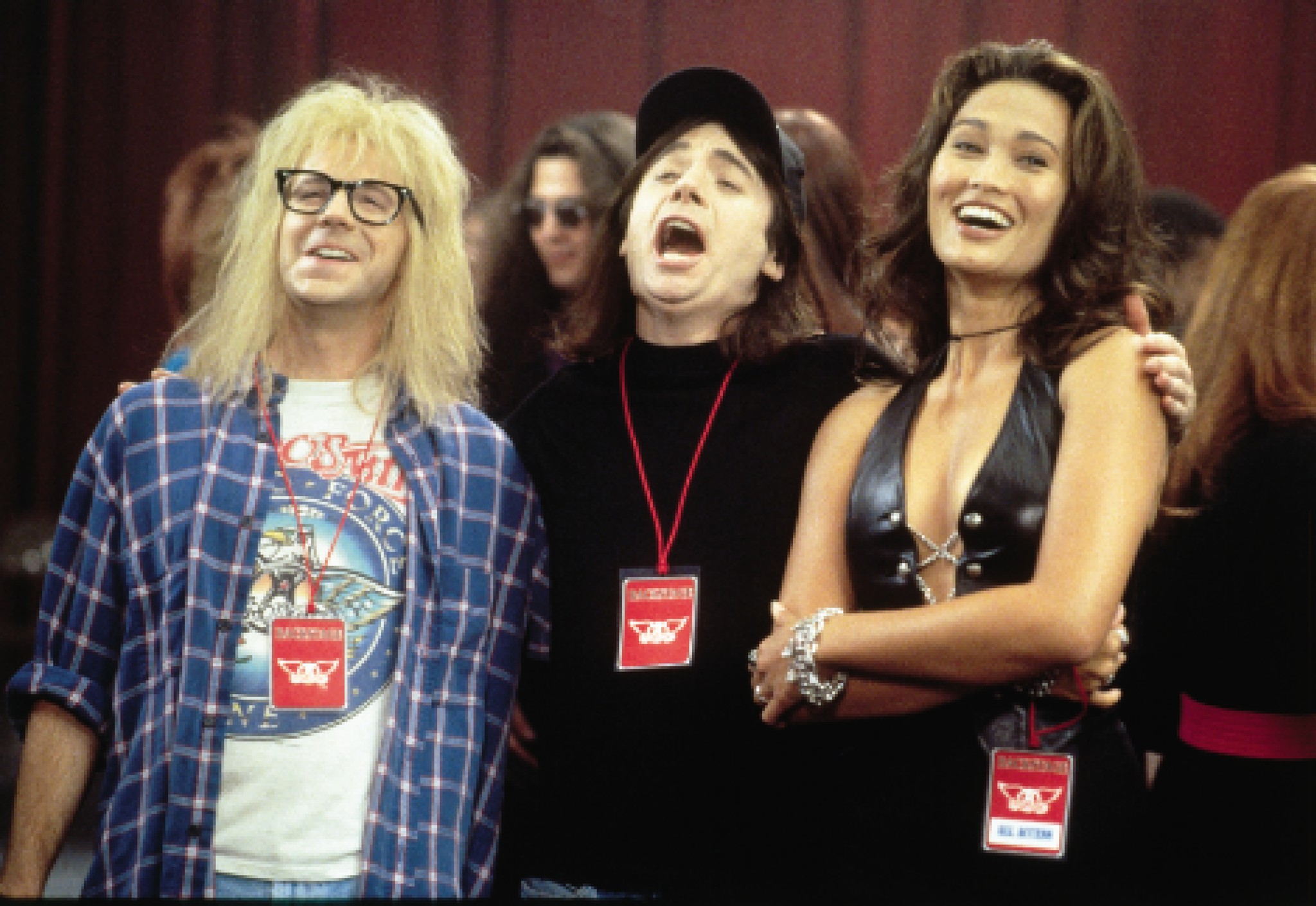
That one absurd instruction neatly bundles the movie’s obligations — signing acts, selling tickets, coping with industry interference — into a single comedy-movie task. The goal is large but the characters are still fundamentally amateurs, which creates the friction that comedy needs.
There’s a domestic angle too. Wayne’s effort to stage something consequential is tangled up with Cassandra’s career and her new record producer, so the festival becomes a test of both his competence and his relationship.
And while the Waynestock machinery drives the plot, the film uses celebrity-set pieces and backstage/concert sequences as its primary forward motion. These are the scenes that keep the film feeling alive — and occasionally out of control.
THE CHARACTER
Why Wayne Campbell matters
Wayne Campbell matters because he’s the stubborn axis the movie spins around. He wants to do something that means something and, crucially, he wants to keep the thing that made him him — the public‑access persona — intact while not losing Cassandra to a more commercial world.
That tension — small‑town earnestness versus the lure of a professional music machine — makes Wayne more than a platform for gags. It gives him decisions to make and makes the comedy feel like it’s coming from character, not just sketch mechanics.
The sequel is a direct continuation of the Wayne and Garth characters, so a lot of the pleasure comes from seeing those relationships stretched into slightly older problems: responsibility, ambition, and whether friendship survives when the stakes grow.
There’s also an antagonist in the form of Bobby Cahn, the producer whose presence complicates Wayne’s romantic life and motivates some of his more detective-like moves. That’s useful: comedy works best when someone’s trying to stop the heroes from achieving a silly but meaningful goal.
THE PERFORMANCE
Why Mike Myers's performance matters
What the contemporary record makes clear is this: the movie doesn’t float on a single comic turn but on a pair. Reviews of the time highlighted Dana Carvey for specific beats — especially the Honey Hornée material — while pointing out the film’s reliance on the chemistry between Mike Myers and Carvey.
That matters here because Myers’s Wayne is framed as the anchor. The screenplay credits include Myers himself, which is one reason Wayne’s motivations — his fear of losing Cassandra and his appetite to do something consequential — feel integral to the character, not just plot armour.
Put simply: the film asks you to care about Wayne’s choices, and it builds its comedy around the push-and-pull of that relationship with Garth. Contemporary reaction singled out the duo’s dynamic rather than a lone stand-out.
UNDER THE SURFACE
Wayne's World 2 has more on its mind than the plot suggests
Beneath the gags and the concert set pieces, the movie keeps returning to friendship and loyalty — two lifelong mates trying to steer into adulthood without losing their shared identity. That’s the emotional bedrock.
It’s also quietly a coming‑of‑age story. Not a teenage rite-of-passage, but the kind where the test is adult responsibility: deliver a festival, protect a relationship, and face what commercial success might demand of you.
The commercialisation of music is explicit: the plot puts Wayne and Garth up against industry figures and the machinery of careers. The festival itself becomes a satire of how rock culture can be packaged and sold.
And the film is self‑reflexive pop‑culture satire in its bones — it’s aware of being a product of celebrity cameo culture and plays that awareness for laughs rather than pretending it’s above the whole circus.
THE FILMMAKING
How Wayne's World 2 was put together
One immediate production fact: Stephen Surjik directed the sequel, taking the helm after Penelope Spheeris’s first film. That change matters because a sequel needs to feel familiarly funny while accommodating a slightly broader scale, and Surjik’s job was to shepherd the sketchy energy into larger set pieces.
Technically, the production used Panavision cameras and lenses and the film was released with Dolby Stereo in selected theatres. It’s a reminder that the sequel was intended as a step up in polish — more stage work, more concert sequences, more sound presence.
That doesn’t overwite the film’s sketch origins, but it does mean the movie was built to handle bigger moments: road trips, backstage mayhem and festival logistics rather than just two guys in a basement reading cue cards.
PRACTICAL EFFECTS
The effects work that gives Wayne's World 2 its physical personality
The credits show the production relied on physical visual techniques: matte painting and opticals were employed for specific visual elements, handled by teams like Illusion Arts and Pacific Title.
Stunt coordination and credited stunt personnel were also part of the build, particularly for the concert and chase sequences. Those practical contributions help the movie feel tangible when it ramps up from small jokes to larger spectacle.
In short, when the film escalates into on-stage and backstage chaos, there’s a real production craft behind those moments — not just cutaways and inserts — which keeps the comedy grounded.
PURE 80S
Wayne's World 2 could not belong to any other decade
Wayne's World 2 is very much a creature of its moment: it belongs to the early‑1990s wave of feature films spun out of Saturday Night Live sketches that leaned hard on guest stars and cameos.
That cameo culture pairs naturally with the film’s fixation on rock‑music spectacle. Licensing and on‑screen performances — including real rock acts — are woven into the plot so the movie feels like both a satire and a ticket to see your favourites do a cameo riff.
Paramount’s promotional muscle and cross‑promotional marketing typical of the early 90s also situate the film in a studio era that saw comedies packaged as tentpole events rather than niche curiosities.
Put together, those elements — SNL lineage, rock festival imagery and studio marketing — make Wayne's World 2 unmistakably of its time. It’s a grown-up sketch riding the decade’s appetite for celebrity and spectacle.
WATCHING IT NOW
What has aged — and what hasn't
Some things age like a fine t-shirt: the friendship. The film’s insistence on friendship and loyalty between long-time pals navigating adulthood is still easy to recognise and still funny when Wayne and Garth stumble through real‑world problems.
The direct continuation of the Wayne and Garth characters keeps the movie grounded; if you liked them in the first film, you’ll still recognise the dynamic here. That continuity helps the sequel read as a sequel of character rather than just more sketches with higher stakes.
Certain supporting beats — Christopher Walken as Bobby Cahn and Kim Basinger’s Honey Hornée subplot with Garth — still read as sharp comic decisions that complicate the central relationships.
On balance, the film’s heart — its friendship, the romantic tension around Cassandra, and the festival conceit — remains watchable because these are human things dressed in celebrity pyrotechnics.
THE LEGACY
Why Wayne's World 2 still matters
Wayne's World 2 matters partly because it’s the direct narrative continuation of Wayne and Garth’s story; for fans the sequel is a necessary stop in the duo’s on-screen life.
Its box-office gross — approximately $72 million worldwide during its initial run — shows it reached a broad audience at the time, even if it didn’t eclipse its predecessor.
Culturally, the soundtrack and the on-screen performance by Aerosmith were notable elements of the film’s profile. The movie embraced live rock moments and licensed music, which helped it land in the popular visibility of the moment.
So its afterlife is mostly as a period piece in the franchise: a sequel that tried to scale up the sketch while keeping the central friendship intact.
THE VERDICT
Does Wayne's World 2 still hold up?
Yes — if what you want is a warm, noisy buddy comedy about friends trying to grow up without quite giving up the habits that made them who they are. The film runs a brisk 91 minutes and keeps Wayne and Garth at its core as they attempt to move the show out of the basement and into something consequential.
Waynestock — the Jim Morrison‑prompted festival Wayne decides to stage — gives the movie a solid, silly spine. The central conflict (delivering the promised lineup while managing Cassandra’s career and Bobby Cahn’s interference) provides real stakes for a comedy that could easily have drifted into aimless cameo flashes.
The celebrity set pieces and backstage sequences are the film’s main pleasure: they push the story forward and create moments where the characters are tested in public, which is funnier than it sounds. Supporting threads — Garth’s Honey Hornée subplot, Del Preston as the roadwise connector, and Walken’s antagonism — supply texture.
So should you watch it? If you like the idea of a sequel that treats its leads like friends rather than punchlines, and you enjoy early‑90s rock spectacle with winked cameos, it’s worth a revisit. It won’t convince anyone it’s high art, but it still gets to the honest stuff under the noise: loyalty, the awkward first steps toward responsibility, and two blokes who aren’t ready to stop being themselves.
Share this movie
// Keep watching
More movies from the 90s
If Wayne's World 2 is your kind of movie, there's plenty more on the shelves worth rewinding.
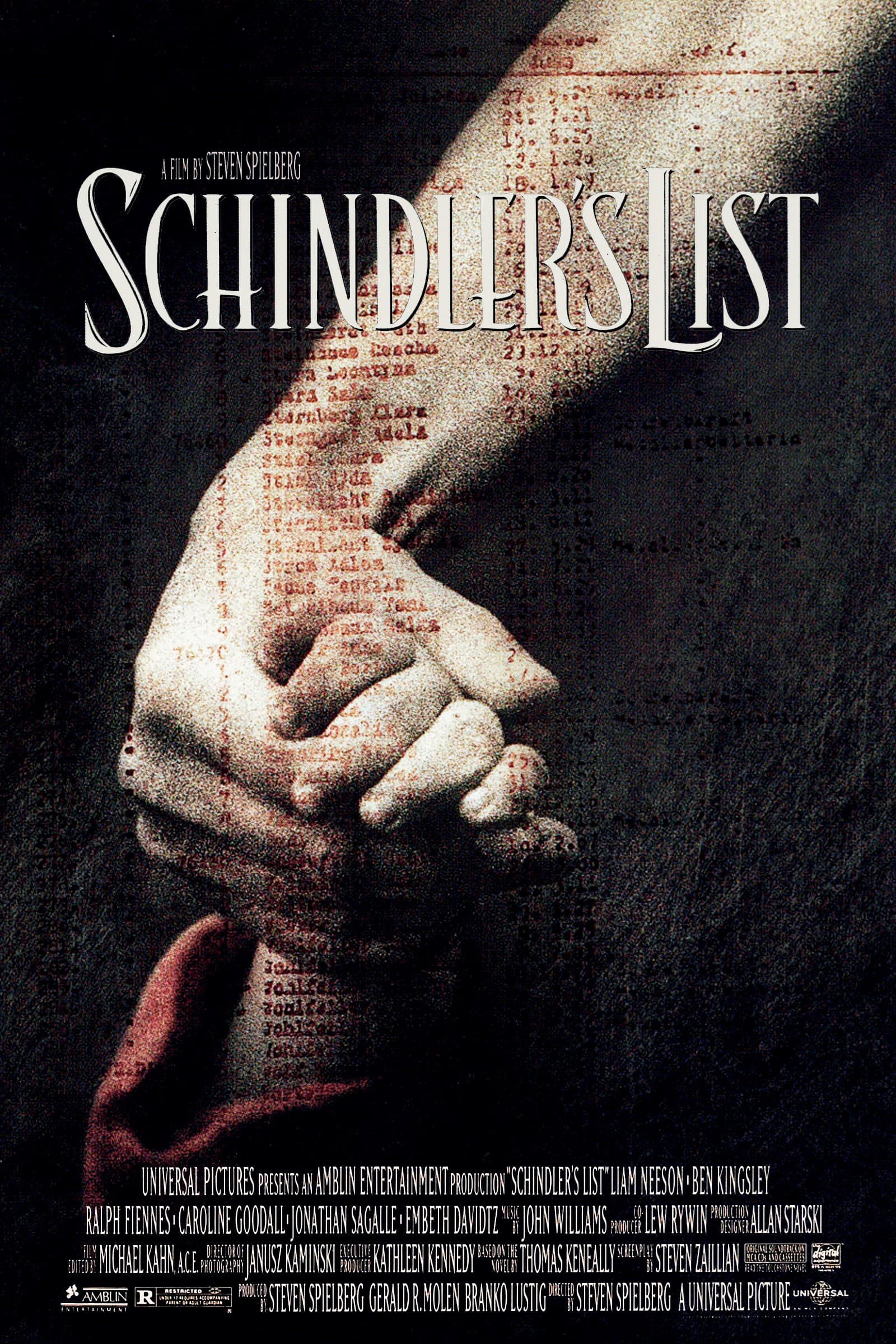
1993 // VHS
Schindler's List
A businessman who keeps a list — and keeps changing the kind of man he is.
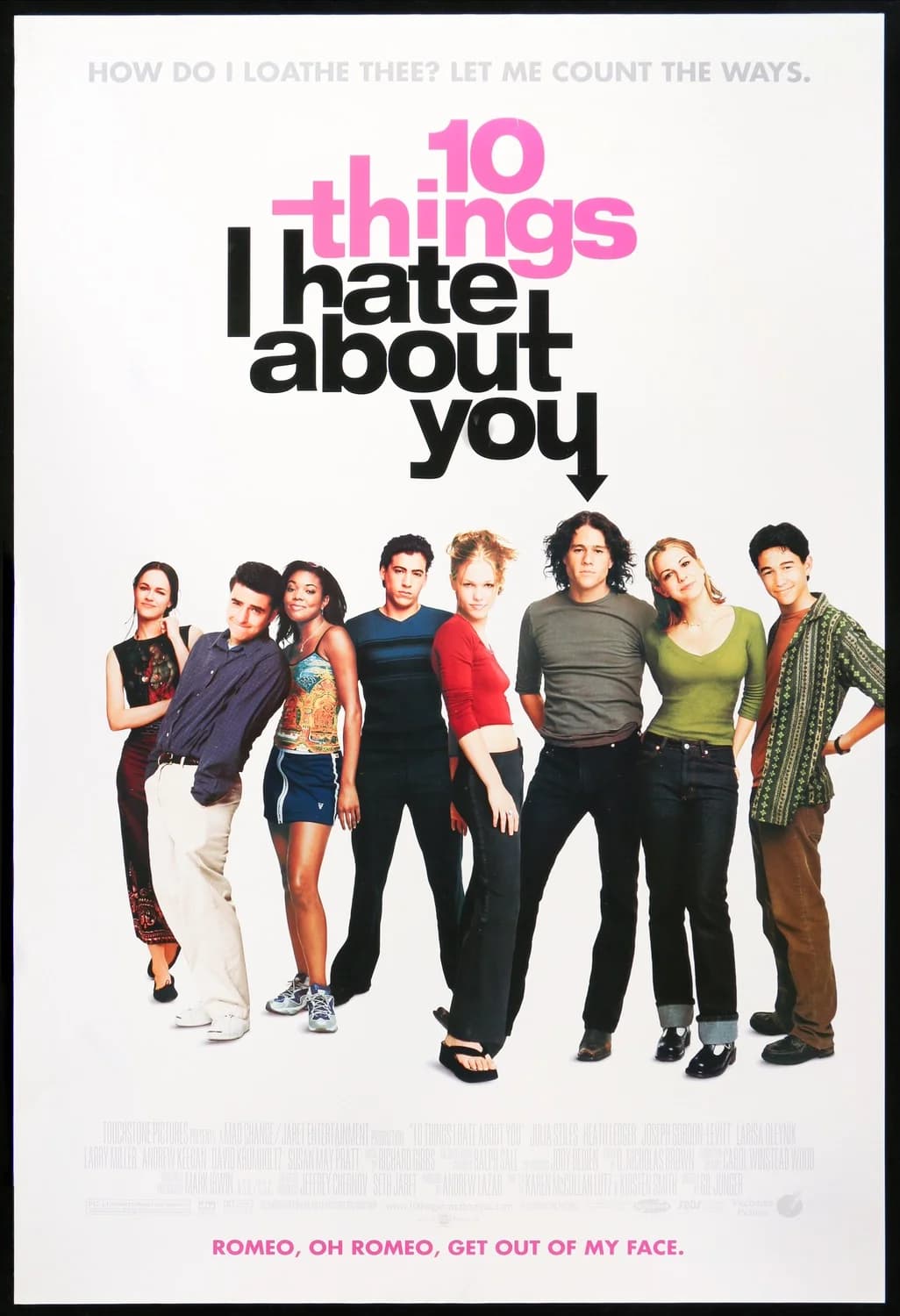
1999 // VHS
10 Things I Hate About You
Sibling rules, a rooftop serenade and one very stubborn Kat — Shakespeare in a school corridor.
1999 // VHS
American Beauty
Lester Burnham, suburban rot and a midlife argument that still stings.